
Carbon Membranes: A New Hope for Sustainable Aquaculture Wastewater Treatment
Ehsan Shirkhanlo reporting from the Vice-Presidency for Research and Technology News Desk of the University of Tehran:
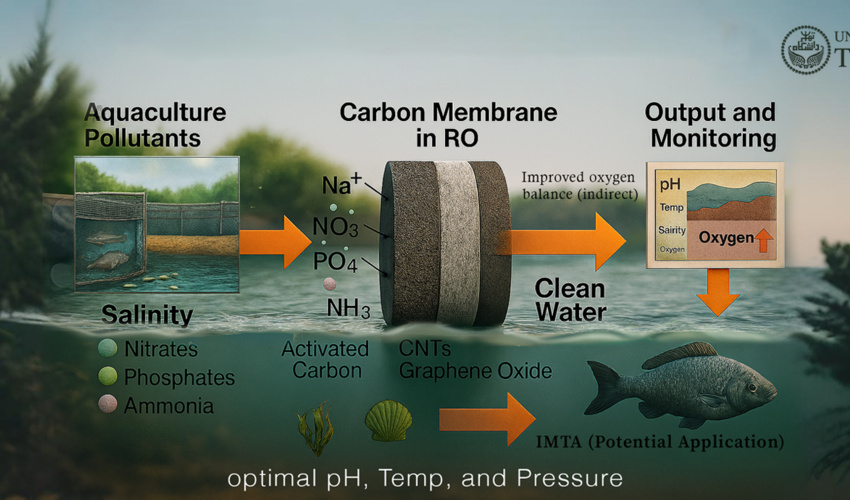
Researchers at the University of Tehran have achieved a remarkable breakthrough in aquaculture wastewater treatment by integrating advanced carbon membrane technology into reverse osmosis (RO) systems. The study, led by Dr. Arash Javanshir, Professor at the College of Agriculture and Natural Resources, demonstrates that carbon-based membranes can remove more than 95 percent of harmful pollutants from aquaculture effluents — marking a major step toward water recycling and sustainable aquaculture development in Iran.
Addressing Iran’s Water Crisis through Innovation
According to Dr. Javanshir, Iran faces an unprecedented water scarcity crisis, making water purification and reuse among the nation’s most urgent priorities:
“We initiated this research to find a scientific and locally adapted solution to reduce water consumption in aquaculture industries. By employing carbon membranes as a pre-treatment stage in reverse osmosis systems, we achieved over 95% removal efficiency, preparing the water for safe reintroduction into the production cycle.”
Technical Insights and Key Findings
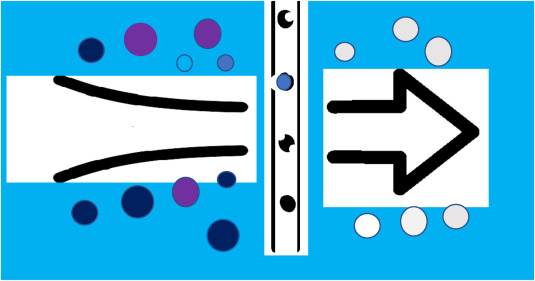
The research evaluated several types of carbon membranes — including carbon molecular sieves, activated carbon membranes, carbon nanotube membranes, and graphene oxide membranes. Results showed that their porous structure and exceptional adsorption capacity make them ideal for filtering pollutants such as nitrates, phosphates, ammonia, and salinity.
“RO membranes are extremely sensitive — even the smallest particles can cause severe fouling and efficiency loss. Using carbon membranes as a pre-filtration stage allowed us to mitigate this issue significantly, improving the overall system performance,” explained Dr. Javanshir.
The study’s preliminary results, obtained under laboratory-scale testing using water from common carp and trout aquaculture systems, demonstrated high efficiency.
“At this stage, we observed impressive results, and our next goal is to scale up the process for industrial application and push pre-filtration efficiency closer to 100%,” he added.
Hybrid Innovations and Future Directions
Beyond classical carbon membranes, the study also explored the development of hybrid membranes and nanocomposites that combine the strengths of multiple materials to deliver superior performance. These new generations of membranes allow customized treatment solutions for specific wastewater conditions.
Dr. Javanshir emphasized the critical role of operational parameters in optimizing performance:
“Factors such as pH, temperature, and feed-water composition have direct effects on membrane efficiency. For this reason, we proposed the integration of real-time monitoring systems to provide continuous data for dynamic process optimization.”
 Interdisciplinary Collaboration and Industrial Potential
The project was conducted through close collaboration among experts in chemical engineering, environmental science, and biophysics, paving the way for smart water treatment plants and industrial-scale water recycling technologies.
“This project proved that interdisciplinary collaboration can offer both scientific and practical solutions to one of our most pressing environmental challenges. With the support of relevant institutions, we aim to transfer this technology from the laboratory to the industrial sector,”
Conclusion
The use of carbon membranes in reverse osmosis systems represents a significant leap forward in Iran’s pursuit of sustainable water management. The pioneering work of Dr. Arash Javanshir and his team exemplifies the University of Tehran’s vital role in linking scientific innovation with industry — a step toward a more sustainable and resilient future for the nation’s water resources.
Authors: Sayyed Ali Moezzi, Saeedeh Rastgar, Monireh Faghani, Zahra Ghiasvand& Arash Javanshir Khoei
Your Comment :