
The Enduring Figure of Iran’s Cultural Heritage
Ehsan Shirkhanlo reporting from the Vice-Presidency for Research and Technology News Desk of the University of Tehran:
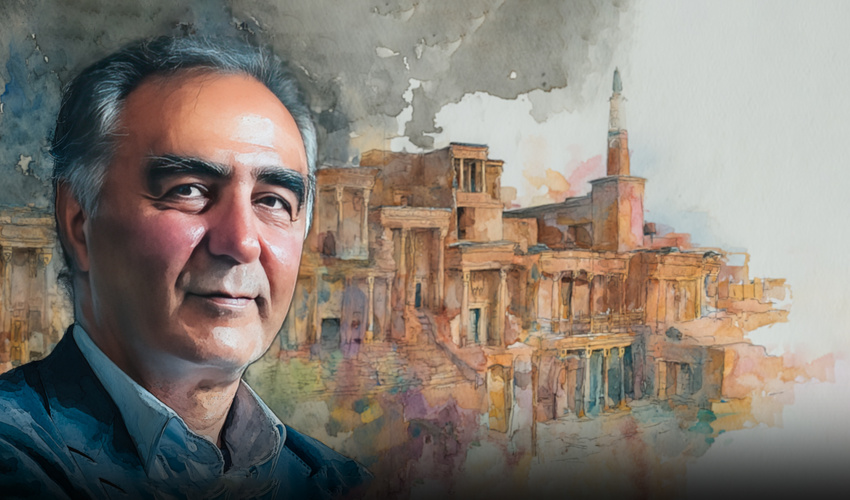
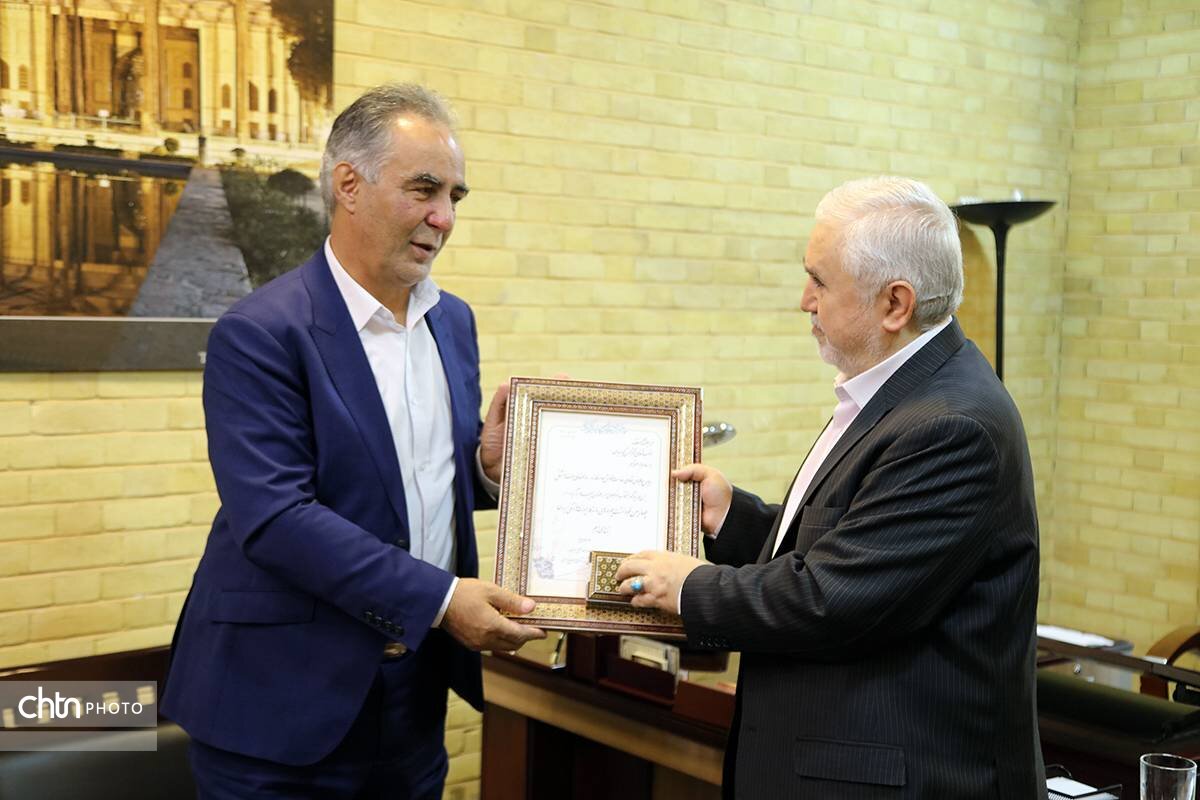
At the fourth ceremony honoring distinguished figures of Iran’s cultural heritage—held at the Sa’dabad Historical Complex with the presence of the First Vice President, the Minister of Cultural Heritage, Tourism, and Handicrafts, and a number of leading cultural and academic personalities—Professor Hassan Karimian, faculty member of the Department of Archaeology at the University of Tehran, was recognized as one of the Outstanding Figures of Iran’s Cultural Heritage.
Professor Karimian, a full professor at the University of Tehran, is one of the country’s prominent scholars in the field of archaeology. His distinguished career includes positions such as Head of the Department of Archaeology at the University of Tehran, member of the National Commission for UNESCO (Committee for the Protection of Cultural Heritage), Scientific Director of the First Encyclopedia of Archaeological Studies of Iran, and member of the National Committee for the Registration of World Heritage Sites.
From Traditional to Modern Archaeology
In an interview with the Research and Technology Desk, Professor Karimian reflected on the reasons behind his recognition as a distinguished figure:
“One of the main reasons is my effort to introduce the concept of modern archaeology to Iran. When I was studying in England, we sometimes felt as though we were in a medical school—wearing lab coats and spending most of our time in laboratories. When I returned to Iran, I decided to institutionalize this scientific and interdisciplinary approach within Iranian archaeology.”
He continued:
“Today, archaeology is no longer limited to excavations in soil; it has evolved into an applied science that interacts with various disciplines. I encouraged each of my students to connect their personal interests or professional backgrounds with archaeological research. For example, one of my PhD students, who was an officer in the police force, worked on forensic archaeology. Together, we analyzed several criminal cases, and in one study, we discovered correlations between burial patterns and behavioral traces of perpetrators—meaning archaeology had, in fact, assisted the police.”
Years of Struggle to Safeguard Iran’s Heritage
Professor Karimian identified his tenure at the Cultural Heritage Organization (1986–1993) as another major reason for his selection:
“Those years were among the most challenging periods for protecting Iran’s historical heritage. Monuments were threatened from three sides: profiteers and illegal excavators, foreign actors seeking to plunder Iranian antiquities, and even individuals who—ironically, out of religious zeal—caused destruction. Conditions were extremely difficult; I was constantly on mission—one day in Torbat Heydariyeh, the next in Kermanshah, and then in Gorgan.”
With a faint, nostalgic smile, he recalled:
“I remember one of my colleagues hid ancient artifacts in the back of his pickup truck under a pile of fruit so that no one would suspect! It’s hard to imagine today, in times of peace, how much sacrifice went into preserving Iran’s heritage back then.”
From Field Research to Global Recognition
Discussing his academic work, he added:
“I have published over 227 papers and 28 books, most of which are based on field research. Several of these studies have directly contributed to the UNESCO World Heritage registration of Iranian sites. For instance, data from one of my articles supported the inclusion of the city of Yazd on the World Heritage List. Another paper, on the ancient Persian sovereignty over the waterways of the Persian Gulf, was later cited by National Geographic.”
A Cultural Warning: If We Don’t Tell Our Story, Others Will
In the final part of his remarks, Professor Karimian emphasized the importance of cultural self-representation:
“If we fail to present our ancient civilization and identity properly, others will distort it. Remember the movie 300? After its release, British archaeologists emailed me, asking: ‘What do the filmmakers claim? Those 300 soldiers were crushed under Xerxes’ chariots like dust!’ This shows that if we do not tell our story, others will rewrite it for us.”
He concluded:
“Iran possesses towering cultural and civilizational walls. We must defend from behind these walls—not just with weapons, but with knowledge, research, and truthful storytelling. Our youth should know that Iran’s history is not merely a past—it is our greatest national asset.”
Your Comment :