
From the Halls of the University of Tehran to Every Corner of the City, A Story of Homegrown Innovation
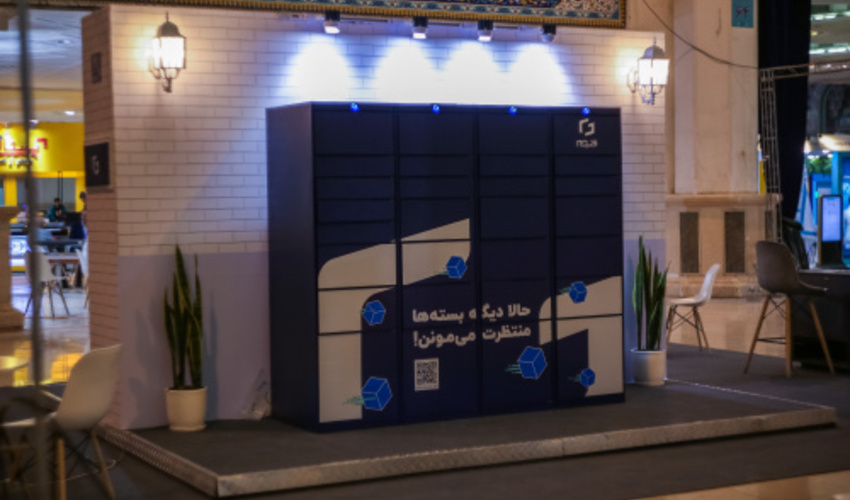
From the heart of student associations at the University of Tehran to a transformation in last-mile delivery, this is how an ambitious idea became a nationwide grid of smart lockers.
When Seyed Ahmad Nabipour earned his degree in Mechanical Engineering from the University of Tehran, he never imagined that just a few years later, he would be leading one of Iran’s most forward-thinking logistics startups.
Now, at just 28, he is the CEO and one of the founding minds behind Ganjeh: a smart locker system that has redefined parcel delivery for countless citizens, particularly for online shoppers who value their time. In today’s world, where convenience matters more than ever, Ganjeh makes it possible for people to receive packages securely in citywide lockers and pick them up whenever they choose, no waiting at the door, no wasted hours.
The concept for “Ganjeh” was initiated in 2019 by four members of the “Mactronic Association” at the University of Tehran. With the university’s support, the founding team joined “Karvelox”, an accelerator located within the University of Tehran’s Science and Technology Park. There, they participated in specialized training programs, including “Idea Validation”, which provided them with the tools to strengthen and refine their concept. This nurturing environment enabled them to develop their idea and build a more robust implementation plan. The team subsequently collaborated with an operations product manager, established strategic connections with Digikala, and successfully transitioned into the execution and market deployment phase.
Today, Ganjeh manages approximately 15,000 parcels daily, serving over 2.5 million users who benefit from its services.
Reflecting on this journey, Nabipour remarks: “We did not have a clearly defined path ahead of us , what we had was each other and the unwavering support of the university, which gave us the courage and determination to tackle a real-world challenge.”
The University of Tehran played a pivotal role in this journey. Its interdisciplinary environment and the close proximity of its faculties fostered innovative collaborations. Nabi Pour asserts: “The accessibility of professors and diverse disciplines at the University of Tehran creates a robust foundation for synergy and the development of ideas.”
Moreover, two university entities, in partnership with Digikala, provided the initial funding for Ganjeh. The university also supported the project by allocating workspace and covering educational expenses, thus serving as a strong operational backbone.
Despite these accomplishments, Nabi Pour regards the entrepreneurial path as inherently challenging: “I am not yet in a position to recommend the demanding entrepreneurial journey to anyone, but... if you think this path will be easy or enjoyable, you are seriously mistaken.”
He hopes that Ganjeh will continue its remarkable growth in the years ahead and make a positive contribution to the development of both the country and the university where it originated.
Your Comment :