
A Civil Engineering Student's Efforts to Reduce Earthquake Risks
Engineer Navid Bazvand's responses to questions from the Vice Presidency for Research and Technology of the University of Tehran regarding the methodology, challenges, and social impact of his research, which was selected as one of the demand-oriented theses by the Ministry of Science, Research and Technology in 2024.
The thesis of Engineer Navid Bazvand, a Master's student at the School of Civil Engineering, University of Tehran, titled "Experimental Evaluation of Intermediate Connections in Conventional Steel Structures with Braced Column to Double Beam and Presenting a Retrofitting Approach," was one of the selected demand-oriented research projects in 2024. This research, supervised by Dr. Mohammad Khan Mohammadi, seeks to provide practical solutions for improving the performance of connections in steel structures and can have a significant impact on increasing the safety and productivity of future constructions. In the following Q&A, we examine the details and achievements of this research:
What steps did you take to choose your thesis topic? Was the initial idea from you, your professor, or a collaborative effort?
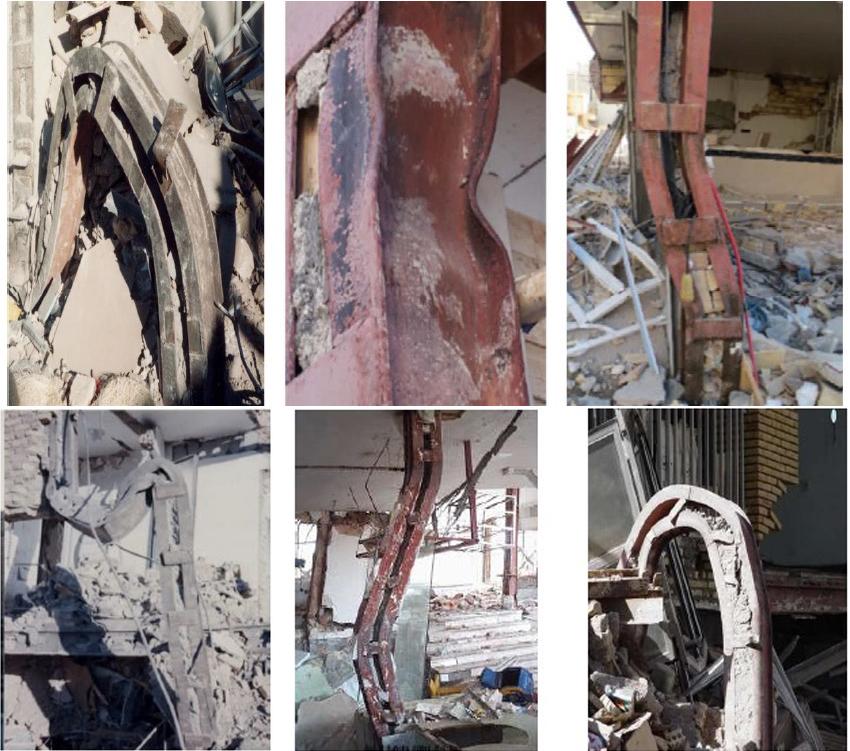
Upon entering the Master's program, like many students, I had uncertainties in choosing a topic and supervisor. However, I was always looking for a topic that was practical for my country and could help improve the quality of life for my compatriots. After reviewing the research backgrounds of professors and recent articles, I became acquainted with Dr. Khan Mohammadi and his research in the field of building retrofitting. Due to the importance of building retrofitting in an earthquake-prone country like Iran, this topic aligned with my goals. After the Kermanshah earthquake in 2017, samples of damaged buildings were transferred to Tehran for laboratory investigation, and I subsequently focused my research on these samples.
How does this research connect to your past work or that of other researchers?
Research related to earthquakes and structural retrofitting has always been of interest to researchers in earthquake-prone countries. My research focused on retrofitting existing steel buildings in Iran, which constitute a major part of the country's residential buildings. These structures showed significant vulnerability in earthquakes like Kermanshah. Although there was relatively good simulation in this field, experimental studies were very limited. By focusing on real samples, my research tried to fill this gap.
What was the main problem this research addressed? Had it been overlooked in the industry or previous research?
Welded steel buildings with specific sections common in Iran, which make up a large number of the country's residential buildings, showed serious damages in the Kermanshah earthquake, such as soft story formation, weak columns, and poor welding quality. Since these sections are less used in other countries, limited research has been conducted on their behavior during earthquakes. In this research, by experimentally studying real samples, practical ideas for retrofitting these structures were presented, which yielded favorable results.
What key tools or methods were used? And why did you choose these options?
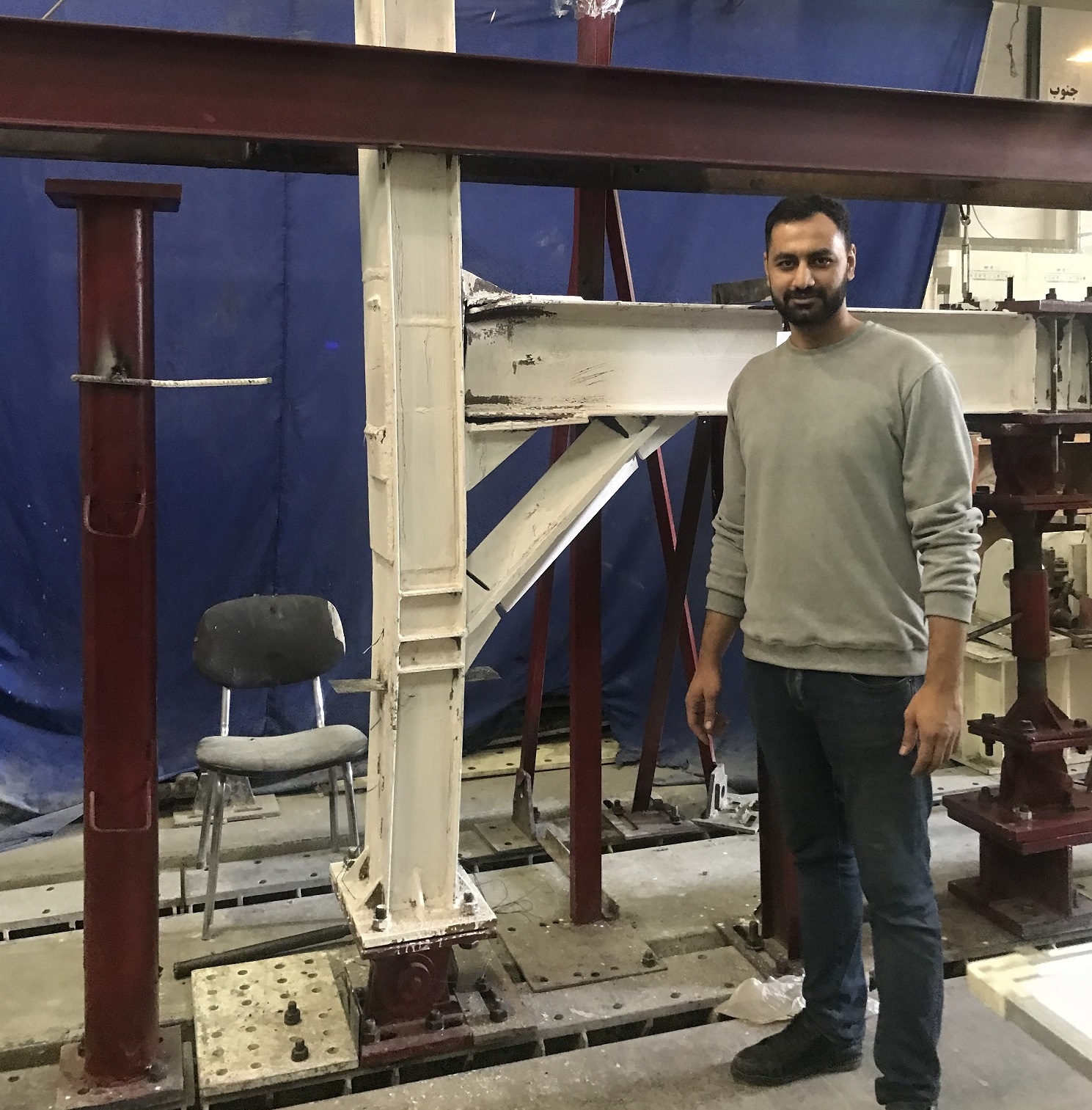
In this research, full-scale real samples of beam-to-column connections collected after the Kermanshah earthquake were tested. These samples were subjected to cyclic loading to compare their behavior in the existing condition and after retrofitting. With the financial support of the Housing Foundation of the Islamic Revolution, this experimental research, which had rarely been done before due to high costs, was implemented.
What was the biggest unexpected challenge? How did you analyze and solve it?
Challenges such as discrepancies between calculations and test results, equipment failure, and high costs were part of the research process. With Dr. Khan Mohammadi's guidance and innovative ideas, these problems were resolved.
If you had unlimited resources, what direction would you take to develop this research?
The tests conducted in this research were two-dimensional and in one structural direction. With unlimited resources, we could test complete three-dimensional structures in both existing and retrofitted conditions to gain a better understanding of their behavior during earthquakes.
If you could give students just one tip for writing an outstanding thesis, what would it be?
Choose a topic that you are passionate about and is practical, and with perseverance and commitment, carry out the research process to the end with high quality.
Your Comment :