
Good News for Farmers and Water Users Across the Country
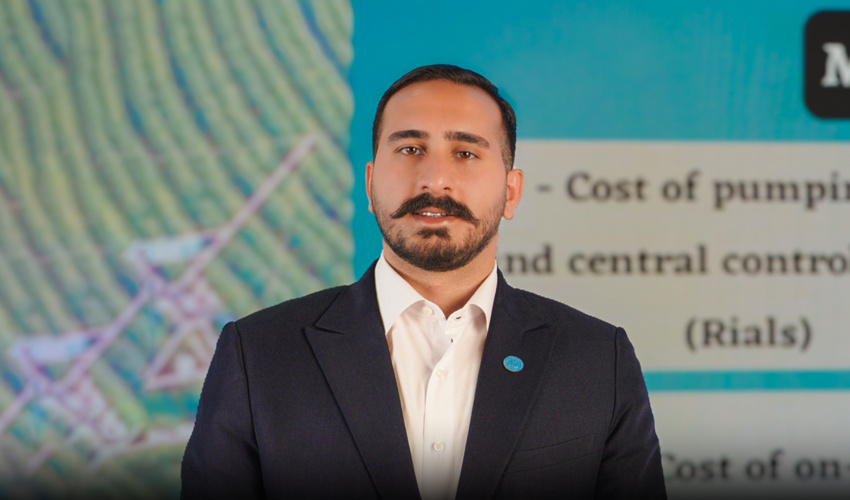
Ehsan Shirkhanlo reporting from the Vice-Presidency for Research and Technology News Desk of the University of Tehran:
In a situation where the challenge of water scarcity and the groundwater crisis have become one of the country's most significant concerns, researchers at the University of Tehran have presented a scientific and practical solution for managing irrigation costs.
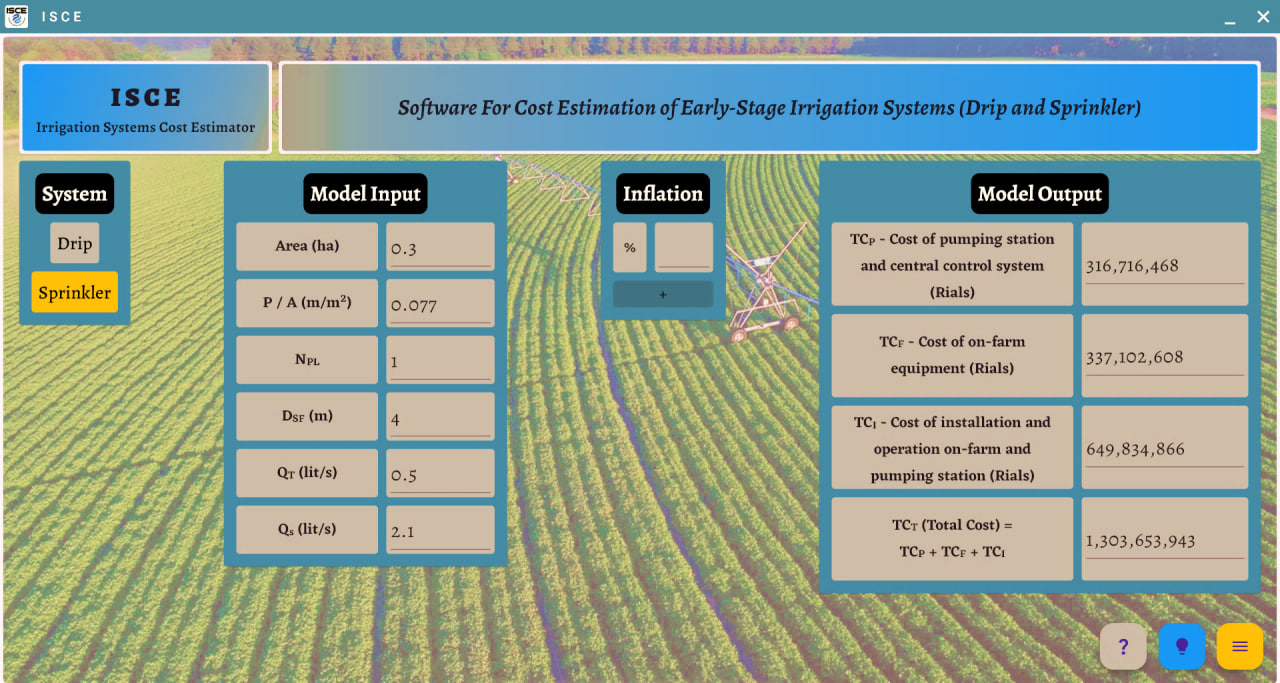
Dr. Masoud Pourgholam-Amiji, a Ph.D. graduate in Irrigation and Reclamation Engineering from the University of Tehran, has successfully designed and built the "ISCE - Irrigation System Cost Estimator" software; the first smart software in Iran and globally for estimating the costs of pressurized irrigation systems.
Why is the water issue critical for Iran?
Dr. Pourgholam-Amiji stated in an interview with the News Desk of the Vice-Presidency for Research and Technology at the University of Tehran:
"Over 10% of the Gross Domestic Product and more than 20% of national employment are dependent on the agricultural sector. However, out of Iran's 609 aquifers and plains, 432 plains are in a critical state and 290 are in a super-critical and restricted status."
He emphasized:
"The cumulative deficit in the country's groundwater reservoirs has reached 140 billion cubic meters; meaning even if no new extraction takes place, years will be needed to partially restore these resources."
Why focus on modern irrigation systems?
In explaining the necessity of his work, this researcher said:
"Irrigation in the country is carried out in two ways: surface irrigation and pressurized irrigation. Pressurized irrigation—including localized and sprinkler systems—is the modern method of irrigation worldwide, and currently, about a quarter of the country's lands use this method."
What is the advantage of ISCE?
According to him, the biggest need of water users is to be able to accurately estimate the total cost before project implementation:
"Foreknowledge of costs helps improve scheduling, increase productivity, and prevent financial and executive errors. Development documents also refer to the necessity of cost estimation, but no software tool existed for it. ISCE is the first software with such capability, both nationally in Iran and globally."

Why hasn't anyone done this before?
He explained:
"Creating a national database that both covers all parts of the country and includes various types of pressurized irrigation systems was an extremely massive task. Although this project was defined as a doctoral thesis, its scope and complexity were far beyond a typical university project; this is why it took 7 years."
Technical Capabilities of the Software
ISCE is based on 20 years of real-world data from the country's irrigation projects.
Information is categorized into two main sections:
Independent variables (about 40 influential indicators); such as region type, climate, area, irrigation method, land slope, and...
Dependent variables; including four cost categories:
- Pumping station and central control
- On-farm equipment
- Implementation cost
- Total project cost
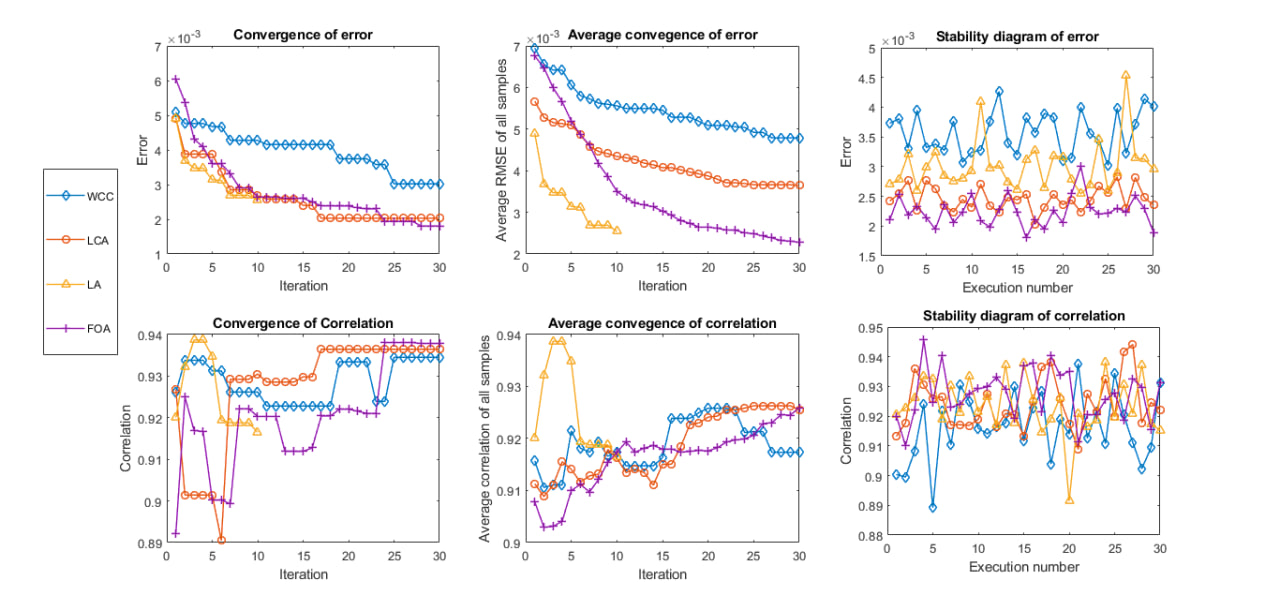
This data has been analyzed using mathematical modeling, neural networks, and machine learning methods.
The Result: The software is capable of simulating more than 80 different irrigation project scenarios and predicting their precise cost—dynamically and up-to-date, adjusted for inflation and market changes.
Why did this project become global?
We asked why journals like Nature paid attention to this work. He responded:
"Reputable journals take universal and practical works very seriously. The issue of water is a shared concern for all countries. But more importantly, this research was not an ordinary thesis; the time, data, modeling, and a truly usable output—these are the things that make applied sciences valuable."
The Heartfelt Words of a Committed Researcher
Dr. Pourgholam-Amiji added in a frank tone:
"At the beginning of the project, we requested support from some organizations. Those same organizations are customers of this software today. But at that time, they either did not trust the scientific capability of academics or were waiting for the final result and were unwilling to invest in research. This behavior is painful for the country's academic community."
The Role of the University of Tehran
He concluded his remarks by expressing gratitude to the University of Tehran:
"The University of Tehran played a fundamental role in the completion of this project by providing laboratory facilities, scientific support from prominent professors like Dr. Liaghat and Dr. Ahmadali, and extending the research period. Without this support, such a major output would not have been possible."
The ISCE software is now available to consulting engineering firms and responsible bodies, and as an indigenous, scientific, and practical tool, it can play a decisive role in the country's water management.
Link to the published article
PARS MEDEQ company, sponsor of Vice-Presidency for Research and Technology News Desk
Watch the interview clip with English subtitles below.
Your Comment :