
Beyond Limitations: An Interview with Dr. Hassan Rezaei
The Vice-Presidency for Research and Technology News Desk of the University of Tehran:
This conversation reviews the activities and academic achievements of Dr. Hassan Rezaei Haftador, who, despite being visually impaired, has spearheaded the path to enhance access to research resources in two key areas.
-
The first section discusses his successful and practical project of producing specialized audiobooks (vocalization of classical texts) for the academic community.
-
The second section details his efforts as the editor-in-chief of an international scholarly journal that facilitates the global dissemination of Islamic research in English.
Part One: The Plan for Visualizing Islamic Resources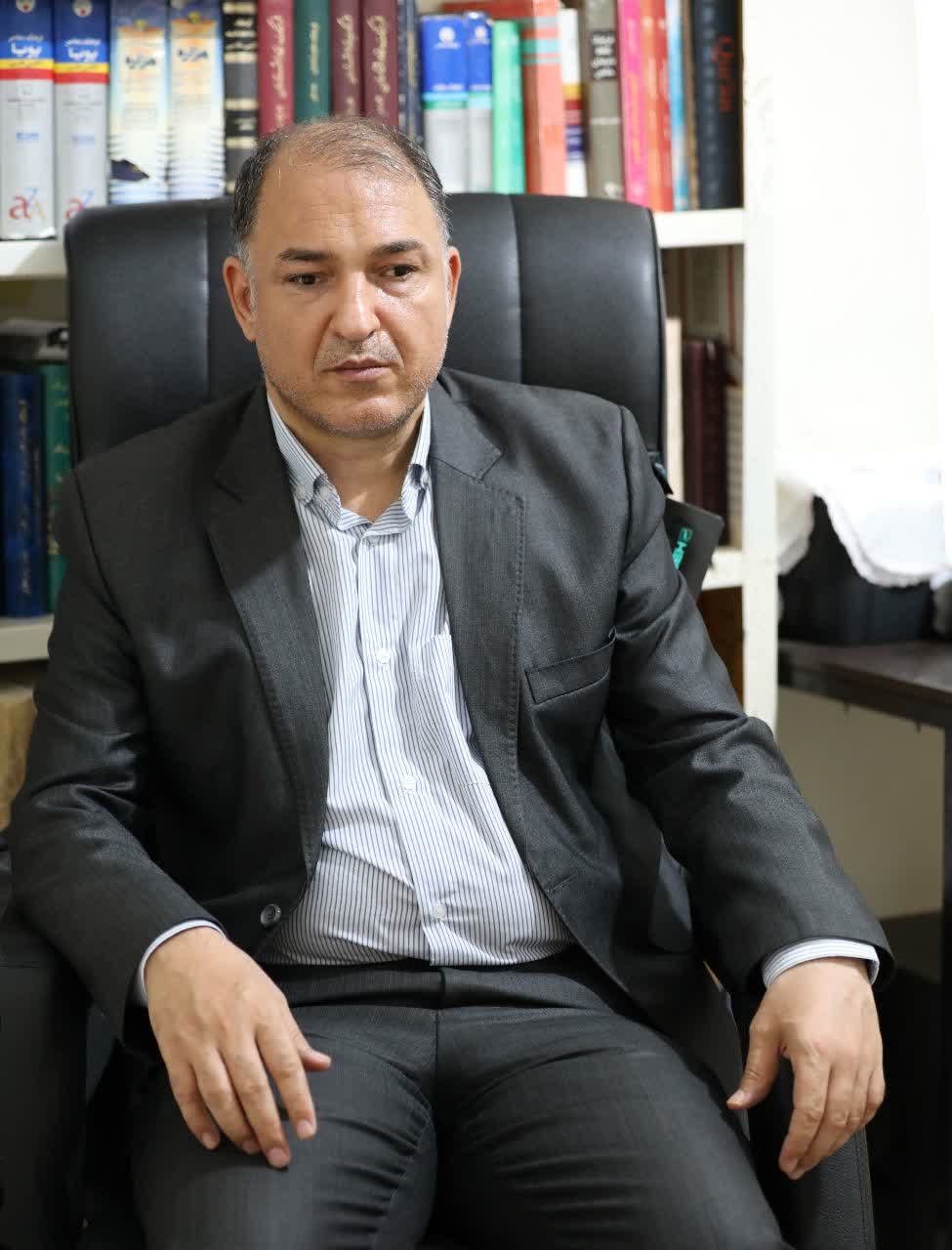
Dr. Rezaei's pioneering research-practical project in the field of Quranic and Hadith sciences, focusing on the production of audiobooks, has created a significant change in access to specialized Islamic texts in the areas of Tafsir, Nahj al-Balagha, and Sahifeh Sajjadieh.
This project is rooted in his personal concern and long-held aspiration for accessing resources similarly to sighted individuals. He emphasized that the limitations in accessing sources practically restrict the scope of studies for visually impaired researchers, and stated that the main goal is to bridge this gap and facilitate the research path. A notable aspect of this project is that the produced item is highly useful and practical not only for the target community (the visually impaired) but also for sighted individuals in the era of expanding audiobooks.
Overcoming the Scholarly and Technical Challenges of Audiobook Production
The required precision in producing these resources necessitated overcoming complex challenges:
-
Scholarly Challenge (Pronunciation Accuracy): Ensuring the correct pronunciation of specialized words and proper nouns in classical texts (such as correct voweling/Arabic diacritics). This was achieved through the meticulous use of atlases, dictionaries, and encyclopedias during the proofreading stage, as well as re-editing by Dr. Rezaei himself after the initial recording to eliminate any human reading error.
-
Infrastructure Challenge (Technical): The lack of professional and acoustic studios. Despite this limitation, the challenge was overcome through efforts to procure quality equipment and through teamwork.
He stated that the produced audiobooks feature vocal entry lists and track divisions so that the user can access the exact section or chapter they need. This capability significantly increases the speed of content reference for the researcher.
Dr. Rezaei made an important request to the Vice-Presidency for Research at the University of Tehran:
"It is necessary to start with the University of Tehran Press and mandate the production of an audio version as one of the requirements for authors' book publication. This resolution imposes no financial burden on the university but is a long stride toward expanding the culture of reading and providing resources for the entire community."
Section Two: Editing an International Journal; Journal of Contemporary Islamic Studies (JCIS)
In the second part of the interview, Dr. Rezaei discussed his activity as the editor-in-chief of the specialized journal,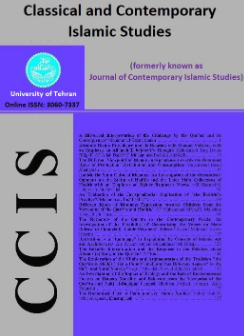 the Journal of Contemporary Islamic Studies (JCIS), which is published in English by the University of Tehran's Farabi Campus.
Success Amidst Initial Obstacles
On its path, the JCIS journal faced obstacles such as a challenge in attracting articles (due to a lack of initial credibility) and difficulties in the peer review process and the acceptance of revisions by some authors. Despite these difficulties, the journal achieved important successes through collective efforts:
-
Acquiring "Grade B" scientific status from the Ministry of Science in 1400 SH (2021).
-
Attaining the position of the first English-language specialized journal of the University of Tehran in the field of Theology.
-
Winning the title of the "Commended Journal" in one of the research festivals.
-
Maintaining strict regularity and precise planning in its quarterly publication.
Scholarly Mission in the International Arena
The journal's editor-in-chief explained the importance of publishing research in English within the global academic space:
"Publishing articles in the field of Islamic Studies in English provides the University of Tehran with the opportunity to convey the voice of its research and perspectives to the global community of researchers as a credible academic hub. This plays a fundamental role in strengthening the interreligious and civilizational dialogue based on academic resources and can serve as a bridge for foreign researchers to access profound Islamic studies."
Your Comment :