
Interview with Dr. Mozhgan Jayez, Author of the Selected Book at the 2025 University Book Festival
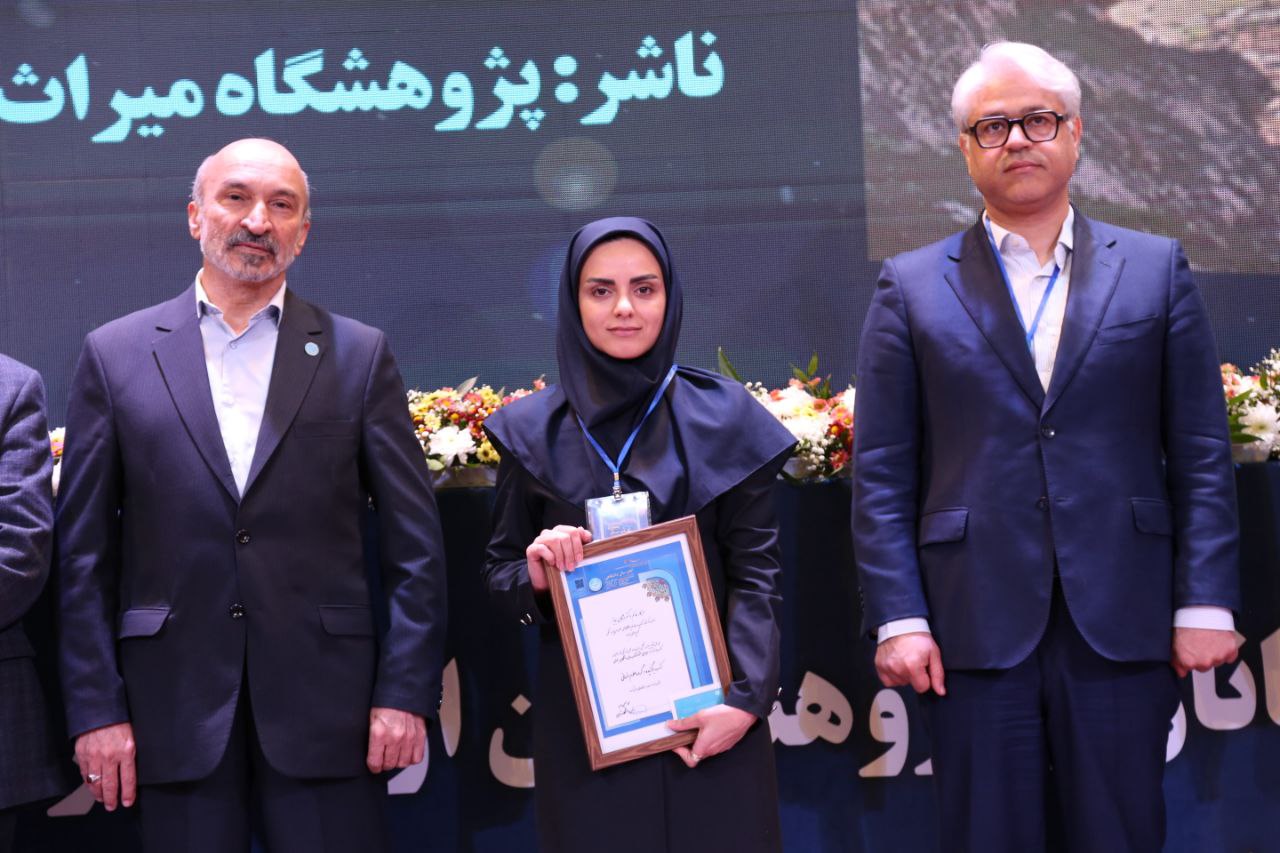
From right: Dr. Ehsan Chitsaz, Dr. Mojgan Jayez, and Dr. Mohammad Hossein Omid
(34th University of Tehran Research and Technology Festival, December 14, 2025)
The Vice-Presidency for Research and Technology News Desk of the University of Tehran:
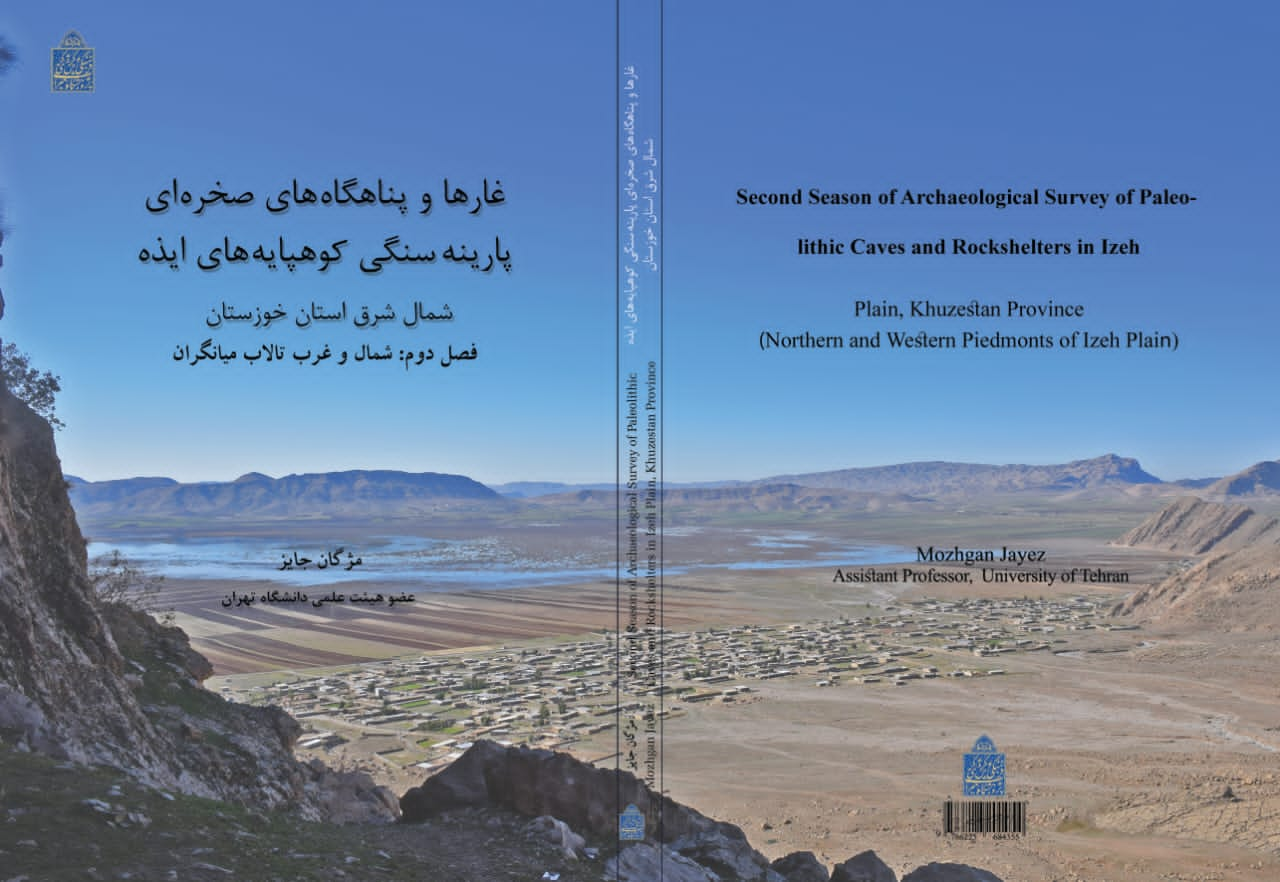
Following the selection of the book "Paleolithic Caves and Rock Shelters of the Izeh Plains, Khuzestan" as the chosen book at the University Book of the Year Festival in December 2025, we held a brief conversation with the author, Dr. Mozhgan Jayez, a faculty member of the Department of Archaeology at the Faculty of Literature and Humanities, University of Tehran, which follows below.
What scientific gap or need in your specialized field was the main motivation for authoring this work?
My book focuses on the caves and rock shelters of Izeh in Khuzestan, where human groups lived during the Paleolithic era—a period when hunting-gathering was the primary mode of human life.
This period is generally overlooked both in the educational system and in Iranian archaeological research; consequently, less attention has been paid to the use of scientific methodology, theoretical foundations, and structured research in this field.
This book focuses on a project related to this era that was carried out systematically from the beginning—starting with major research questions, methodology, fieldwork, and analysis of findings. Therefore, it promotes a more professional approach to this field.

View of the entrances of two Upper Paleolithic caves in Izeh
What was the greatest challenge you faced during the writing of this book, and how did you overcome it?
My biggest challenge, not only in this book but in conducting field research, was that due to the shortage of specialists for this period in Iran, the few existing experts are consulted during the peer-review stage, and thus their reviews are usually positive. However, unfortunately, at management levels, the interference of individuals who lack actual expertise in these fields creates numerous challenges for ongoing research, making the process erosive and time-consuming for researchers.
It took a very long time for my book to reach the printing stage after being reviewed and accepted because it faced the personal opinions and tastes of non-specialists at the management level. In such situations, researchers usually enter an erosive follow-up process where, even when the current manager is finally convinced, they often change, and one must start the entire process over to justify the new manager regarding something they have no expertise in. Naturally, I spent four years speaking with and following up with different managers, and eventually, with the support of some expert colleagues in this field, I succeeded in publishing the book.
In general, if decision-making in the management system is entrusted to specialists and not based on personal taste, the work of researchers will become much easier.
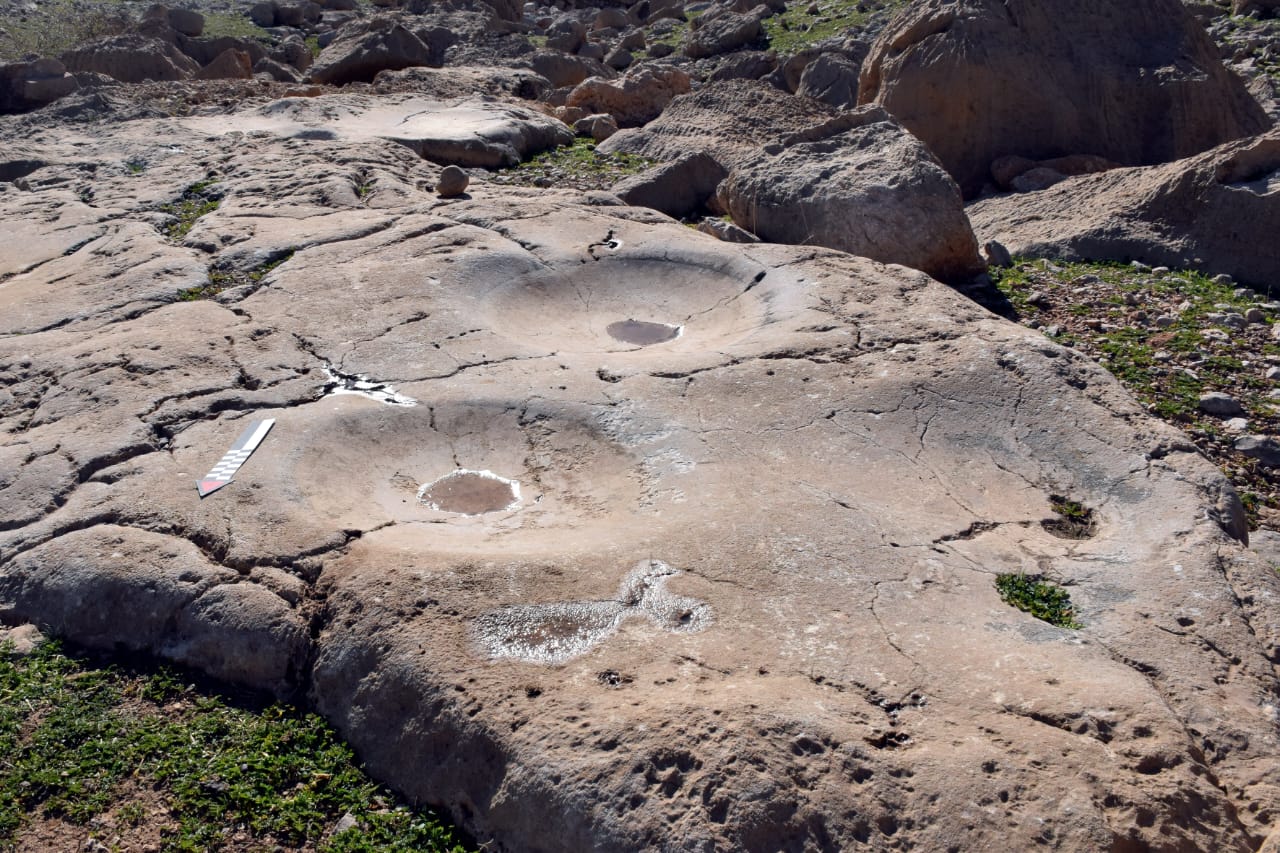
Epipaleolithic rock-cut grinding structures in Izeh
In your opinion, what distinct feature in the content or methodology led to this work being selected as the Book of the Year?
The main feature of the book is its structured nature. In anthropology (which I consider archaeology a subdiscipline of), it is methodologically important not to approach archaeological sites with pre-assumptions, but rather to have a research question and to explain that question correctly. In the next stage, using correct field methods (such as systematic surveys, purposeful and controlled sampling, etc.), providing a correct description of what we have done and found becomes highly significant.
Explaining what our findings mean and what they reveal about past human societies, that was previously unknown, is also important. I believe the book was chosen as the Book of the Year because these stages were correctly followed.
What is the most important achievement or message you would like the audience to grasp after reading this book?
In recent years, conducting field activities has become harder for archaeologists every year, both due to financial issues and the unpredictability of the management process. On the one hand, for security reasons, archaeologists have been barred from many international collaborations, and our access to financial and academic resources outside of Iran has significantly decreased; on the other hand, we are facing extensive destruction of ancient monuments in Iran, which requires organized solutions with regard to both educational and research management. These issues directly affect the quality of scientific work and create many concerns for researchers. For this reason, focusing on research and doing the right work despite difficult conditions has gradually become nearly impossible.
I hope that the studies in this book, the long time spent on them, and the effort made to do the work correctly despite the circumstances, can motivate those who intend to do scientific work to strive despite existing conditions and resist the many obstacles currently placed in the path of researchers.
PARS MEDEQ company, sponsor of Vice-Presidency for Research and Technology News Desk
Your Comment :