
Do you know what the nature of the field of cognitive science is?

Zahra Fayzii from the Vice-Presidency for Research and Technology News Desk of the University of Tehran:
Dr. Ehsan Rezayat, a faculty member and head of the Cognitive Science Department at the Faculty of Psychology and Educational Sciences at the University of Tehran and one of the country's scientific leaders in 2024, says: The field of cognitive science is one of the main areas of study in convergent technologies in the country. The Cognitive Science group was established in the Faculty of Psychology and Educational Sciences in 2022 and currently accepts students in three master's specializations: Cognitive Psychology, Cognitive Rehabilitation, and Mind, Brain, and Education, as well as in the doctoral programs of Cognitive Psychology and Cognitive Neuroscience. Cognitive science is an interdisciplinary field encompassing psychology, engineering and artificial intelligence, medicine, education, linguistics, and philosophy of mind.
Cognitive science functions in any sphere where humans are the main agents. For example, in the managerial space, a manager, as a human, is making decisions, and the manager's cognitive capabilities, mental states, and experiences influence their decision-making.
By understanding these parameters, one can predict and improve their decisions. In summary, in cognitive science, we must be able to identify the functions, knowledge, and processes related to this field and use them to operate in political, economic, and managerial spaces. When they say current wars are cognitive wars, they mean exactly this: currently in the world, they predict the decisions of leaders, heads, and officials through these very cognitive patterns and prepare themselves to better counter them.
The field of cognitive neuroscience is being studied and offered as an important field in prominent universities worldwide, but unfortunately, this field was neglected at the University of Tehran, which is known as the mother university of the country. Currently, due to its importance, it is offered both in medical sciences and under the Ministry of Science.
He stated that military service was a beginning for finding what I was looking for.
I completed my bachelor's degree in electrical engineering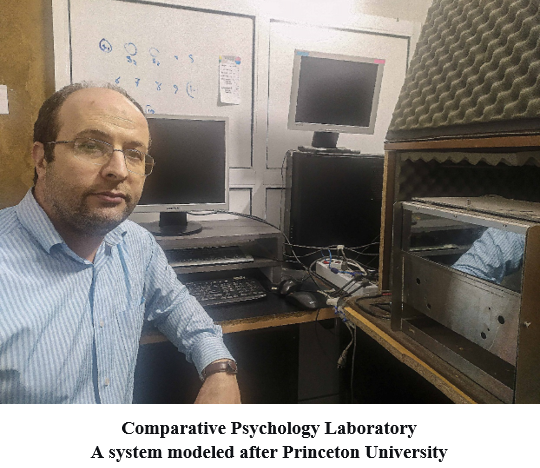 at Shiraz University of Technology. At the end of my bachelor's, I was looking for an interdisciplinary and applied field. After some research, I gravitated towards biomedical engineering and completed my master's degree in biomedical engineering at Sharif University of Technology. My entry into the field of cognitive science began during my alternative military service at the Cognitive Sciences Research Institute. There, a project titled "Low-intensity transcranial ultrasound stimulation of the mouse brain" was defined. In 2012, a protocol was implemented based on a Nature paper.
Along this path, I realized that the field I was seeking was neuroscience, and I started reading books in this field, took necessary courses. In short, during my military service, I prepared to enter the field of cognitive science.
This is why I say it's important during alternative service for the student to be placed in a practical and interesting field of work. If you utilize those capabilities, you do your work, but if you don't, you sit and watch English movies to get acceptance sooner and emigrate.
I got married during my master's and always worked while studying to cover my living expenses. In short, after my military service ended, I worked until 3 PM, and from then on, I stayed at my workplace and studied for the PhD entrance exam. Fortunately, I was accepted at the Institute for Research in Fundamental Sciences (IPM). From 2014 to 2019, I specifically focused on my own field, cognitive neuroscience, during which I conducted electrophysiological recordings from monkey brains.
The faculty member of the University of Tehran regarding the establishment of the Comparative Psychology Laboratory at the Faculty of Psychology said:
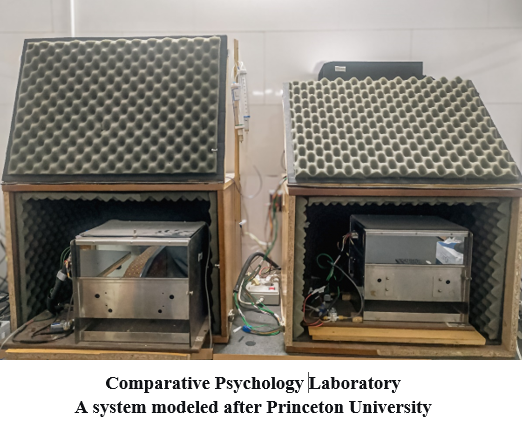 May God have mercy on the veteran professor of the Faculty of Psychology and Educational Sciences and head of the Psychology Association, Dr. Zamani. He allocated a budget of about 500 million tomans to the faculty to establish a Comparative Psychology Laboratory. This budget was spent on equipping the laboratory from floor ceramic to false ceiling and purchasing laboratory equipment, and the laboratory was established with his valuable assistance. Of course, colleagues and students Ms. Parisa Faraji, Ms. Behnaz Namdarzadeh, and Mr. Alireza Naji each contributed in their own way.
For example, one of these friends made a soundproof wooden box from old drawers, another worked on 3D printing design and tools, and an electronics engineer came for its electronics. We built two setups in the laboratory; one was sampled and built based on the reputable Carlos Brody lab at Princeton University, and the other was re-implemented based on a sample from a lab in the Netherlands working on empathy and social cognition with rats, and it is now operational.
Our laboratory currently has three phases. The first phase is to teach all students of psychology and cognitive science the basic goals and principles. The second phase is where the student should be able to conduct behavioral and cognitive science research. The third phase is the electrophysiology recording phase, meaning we can also record data from the mouse brain. For this, we have purchased the device, surgical equipment, and special electrodes, and we have even conducted initial tests.
We only need a neuroscience PhD student who has sufficient time to work on the intended research, and we are currently recruiting the desired student at the university.
He added that our effort at the University of Tehran is to work and plan on an important area to establish a brain stimulation system in Iran.
The field of ultrasound and the use of ultrasonic waves remains a very important field in the world for brain stimulation. One of the important research lines we are working and planning on at the University of Tehran is this very field, and we are trying to be able to establish this system in Iran in the near future. I must add, again, all of this is a legacy of that same military service of mine.
Dr. Rezayat quoting one of the professors: Even in World War II, some research laboratories were not closed.
I mentioned this sentence to say that all scientific work faces challenges, especially in the field of cognitive science, which is currently very important in the world. Fundamental research is a space that requires great patience.
For example, one day in the lab you see all patterns are correct, the electrode is good, etc., but the next day you realize that, for instance, due to a passing subway, noise has been created, and of course a thousand other factors, like a war happening and the internet being cut off; in short, it has disrupted all patterns.
One of the enemy's challenges for our country is to create a new concern and challenge in the country every year so that officials, decision-makers, and researchers cannot do their work. If you notice, since 2018, these cases have been constant. I want to say that we researchers and the country's scientific community should not halt research under any circumstances.
In the end, Dr. Rezayat told his students: Live your research.
I always tell my students, both girls and boys, please live your research. That means, if you are going to work in a research and academic environment, base your life around it. Choose your spouse, future job, and working method based on that foundation. If you are going to be, for example, a university professor or a researcher, you and your spouse must understand this space. This is actually my own lived experience.
This work creates space for you, and space leads to your progress. In fact, if you empower yourself, you place people and the environment in line with your goals.
PARS MEDEQ company and the Mossalanejad Cultural Foundation are the sponsors of Vice-Presidency for Research and Technology News Desk
Your Comment :