A Wake‑Up Call for Traditional Organizations; University of Tehran Professors Warn
Digital Transformation Is No Longer a Luxury—It Is a Condition for Survival
Milad Moein from the Vice-Presidency for Research and Technology News Desk of the University of Tehran:
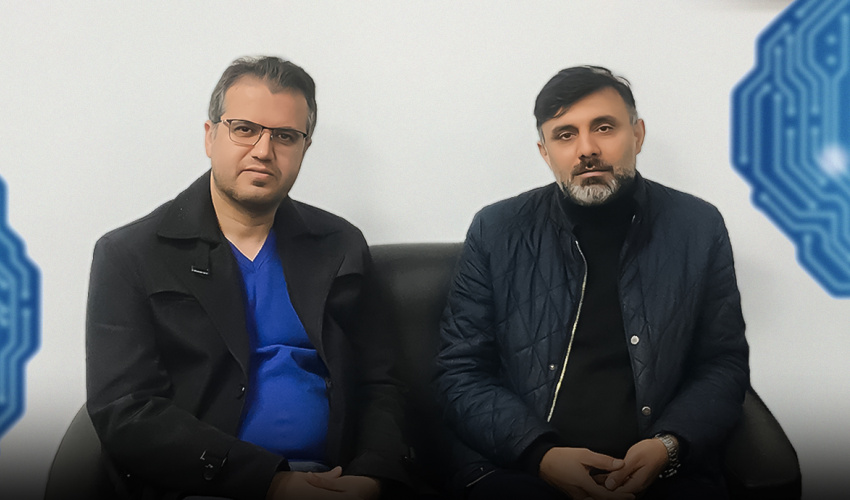
University of Tehran – Faculty of Management — Today, the term “digital transformation” has gained high currency in the country’s managerial discourse, but is there a proper understanding of this concept among managers and policymakers? This question prompted our conversation with Dr. Moohamadreza Sadegimogadam, Associate Professor at the Faculty of Industrial and Technology Management, and Dr. Ayoub Mohammadian, a member of the Department of Information Technology Management at the University of Tehran. The interview was conducted on the sidelines of the project to draft the Digital Transformation Document of the Ministry of Petroleum.
A Major Misconception: Digitalization or Digital Transformation?
At the outset of the conversation, Dr. Sadeghi Moghadam dismissed superficial definitions of digital transformation, describing it as something far beyond the mere purchase of tools and equipment. He stated: “Digital transformation means changing the business models of Iranian enterprises through technology enablement. This concept should not be confused with simply digitizing forms.”
Dr. Mohammadian, expanding on this discussion, emphasized a “paradigm shift,” noting:
“In the past, technology was a tool for cost reduction, but today, with the convergence of artificial intelligence, the Internet of Things, and data analytics, technology is creating new markets. We must consider how an organization’s DNA can be transformed by technology, rather than merely making existing processes a little faster.”
Inefficient Bureaucracy and the Need for Transparency
A significant part of the discussion was devoted to diagnosing the shortcomings of the country’s administrative system. Criticizing the decline in the quality of bureaucracy within governmental and public organizations, Dr. Sadeghi Moghadam described digital transformation as the only viable solution to combating corruption and inefficiency. He stated: “The issue of transparency and the fight against corruption can no longer be addressed through traditional methods. The path to curing this problem is digital transformation. However, digitalization without changing the nature of processes is itself problematic. Simply digitizing an unnecessary paper form solves nothing; we must first ask whether filling out that form is necessary at all.”
Structural and Cultural Resistance: The Achilles’ Heel of Transformation
In response to a question about implementation challenges, Dr. Mohammadian identified “managers’ resistance to transparency” as one of the main obstacles. He explained: “Many managers refrain from releasing data under the pretext of security concerns, whereas the proper solution lies in systematic data classification. Around the world, governments have moved toward value creation and entrepreneurship through the ‘open data’ approach.”
The university professor also called for replacing hierarchical structures with flat organizational models and emphasized the need to establish a “Supreme Council for Digital Transformation” within organizations. He noted:
“The IT unit should not be confined to a purely technical role. We need Chief Digital Officers (CDOs) with authority exceeding that of other deputy positions, so they can drive change across all pillars of the organization.”
From right to left: Dr. Moohamadreza Sadegimogadam, Dr. Ayoub Mohammadian, and Milad Moein (reporter)
The Next‑Generation University: A Problem‑Solving Platform
One of the highlights of the interview was the vision outlined for the future of the University of Tehran. Stating that the era of “research for the sake of research” has come to an end, Dr. Sadeghi Moghadam said: “At the Faculty of Industrial Management, we are seeking to become a problem‑solving platform. Today’s national challenges—such as drought, energy imbalances, and inflation—are multidimensional and cannot be addressed within a single discipline.”
Dr. Mohammadian also offered candid advice to students, noting:
“The age of degree‑centrism is over. Students must develop soft skills, design thinking, and risk‑taking capabilities. Universities should provide an environment for building minimum viable products (MVPs) and experiencing failure—not merely for writing academic papers.”
The Future: Innovation or Elimination?
In conclusion, the professors agreed that the future of Iran’s economy hinges on breaking the development ceiling through innovation. Dr. Sadeghi Moghadam warned: “If a security‑oriented mindset prevails over a development‑oriented one and platforms are viewed as threats, we will miss the opportunity for an economic leap.”
Referring to global transformations in education, Dr. Mohammadian added:
“If universities fail to adapt to the changes brought about by artificial intelligence and market needs, they will be displaced by international educational platforms. For universities, digital transformation is not a choice—it is a vital necessity.”
PARS MEDEQ company and the Mossalanejad Cultural Foundation are the sponsors of Vice-Presidency for Research and Technology News Desk
Your Comment :