
Water Governance at the Intersection of Science, Ethics, and Sustainable Development

Zahra Fayzii from the Vice-Presidency for Research and Technology News Desk of the University of Tehran:
Dr. Seiyed Mosa Hosseini, Associate Professor in the Department of Physical Geography at the Faculty of Geography, University of Tehran, and holder of a Ph.D. in Water Resources Engineering, discussed in a scholarly interview the structural challenges of water governance in Iran, the alarming condition of groundwater resources, and the persistent gap between academia and executive institutions. He emphasized the necessity of integrating specialized scientific knowledge, professional ethics, and effective governance mechanisms into water policymaking processes.
Recognized this year as a Distinguished Researcher of the University of Tehran, Dr. Hosseini underscored the social responsibility of universities, stating that academic research should not be confined merely to publishing journal articles, but must contribute meaningfully to addressing real national challenges. Throughout his academic career, he has sought to define master’s theses and doctoral dissertations based on the priority needs identified by water-related governmental institutions. According to him, this problem-oriented approach not only enhances scientific rigor but also strengthens the societal effectiveness of academic research. At the doctoral level, he further noted, advancing knowledge at the frontiers of science and maintaining an active presence in the international scholarly community are indispensable responsibilities.
Dr. Hosseini argues that Iran’s water crisis cannot be resolved solely through improvements in “water management”; rather, it requires a fundamental transition toward comprehensive “water governance.” This concept, he explained, rests upon institutional coordination, transparency of information, stakeholder participation, accountability, and the reinforcement of social capital. Referring to recent developments in sustainable development discourse, he emphasized that alongside the economic, social, and environmental pillars, knowledge production, cultural capital, and ethical values are increasingly recognized as complementary dimensions of sustainability. Accordingly, water policies must incorporate these dimensions in an integrated and systematic manner.
 Over the past years, Dr. Hosseini has published more than 85 peer-reviewed articles in reputable international journals and over 50 articles in national academic journals in the fields of hydrology, groundwater management, aquifer modeling, and water governance, making a substantial contribution to the advancement of scholarship in these areas. He has also conducted applied research projects in collaboration with executive institutions, supervised graduate students through a problem-based research framework, and participated in international academic collaborations related to sustainable water resource management.
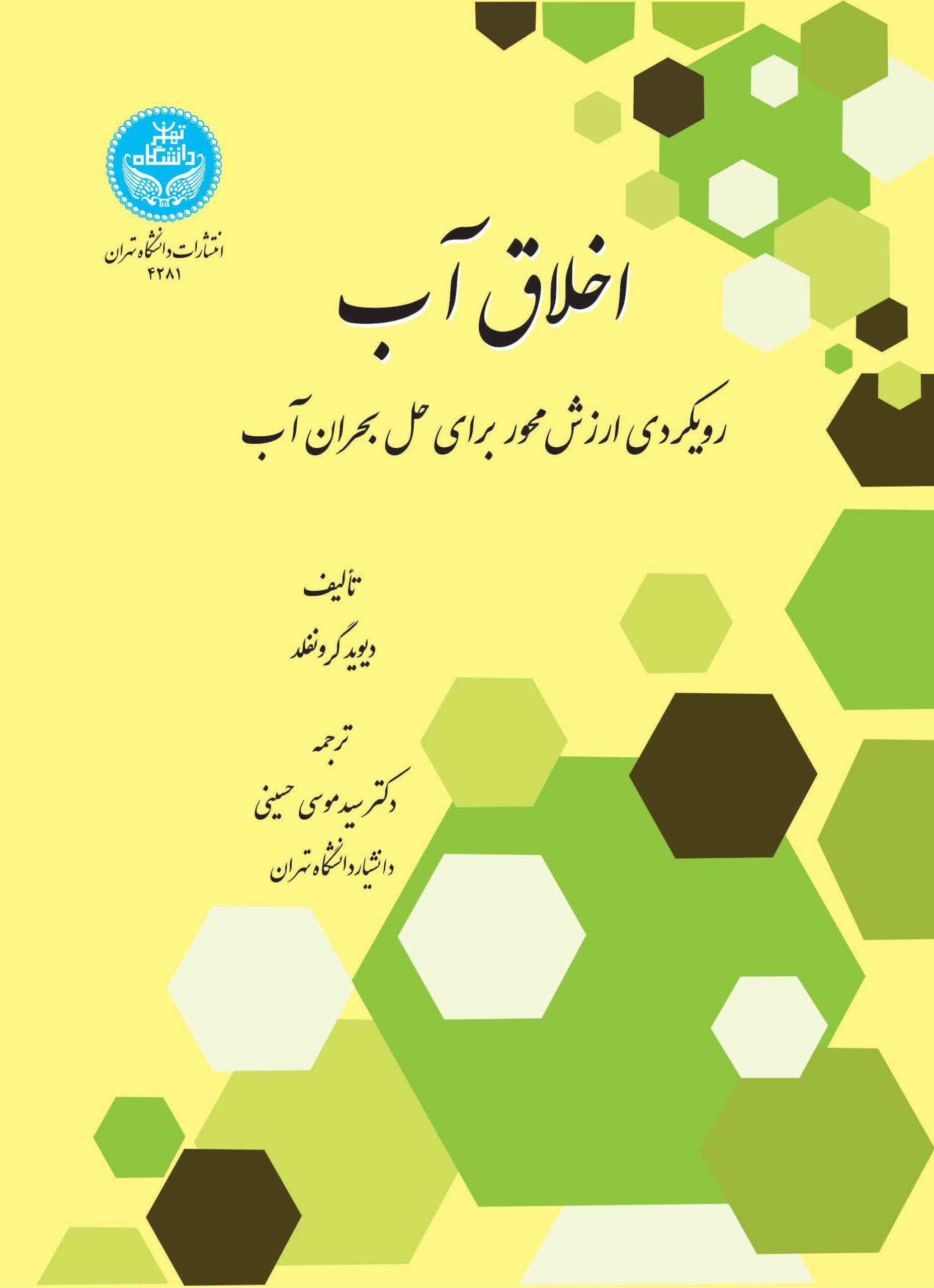
Among his scholarly contributions is the Persian translation of the book Water Ethics, which explores themes such as intergenerational justice, institutional responsibility, the rights of local communities, and the ethical foundations of water resource utilization. He has also contributed to the translation of another authoritative international volume on sustainable water resources management. This work systematically compiles national water-related data derived from both field-based measurements and remote sensing, presenting them in the form of analytical maps and a structured database accessible to researchers and policymakers. The volume further examines contemporary approaches to ensuring the sustainability of groundwater extraction and aquifer management.
In conclusion, Dr. Seiyed Mosa Hosseini emphasized that without ethical commitment, transparency in decision-making, and responsibility toward future generations, effective water governance cannot be achieved. In his view, only through a strong and sustained linkage between universities, society, and executive institutions—and through the practical integration of scientific expertise with ethically grounded values—can responsible water resource management and sustainable development be realized.
PARS MEDEQ company and the Mossalanejad Cultural Foundation are the sponsors of Vice-Presidency for Research and Technology News Desk
Your Comment :