
Pioneer of Persian AI in Bridging Industry and Academia
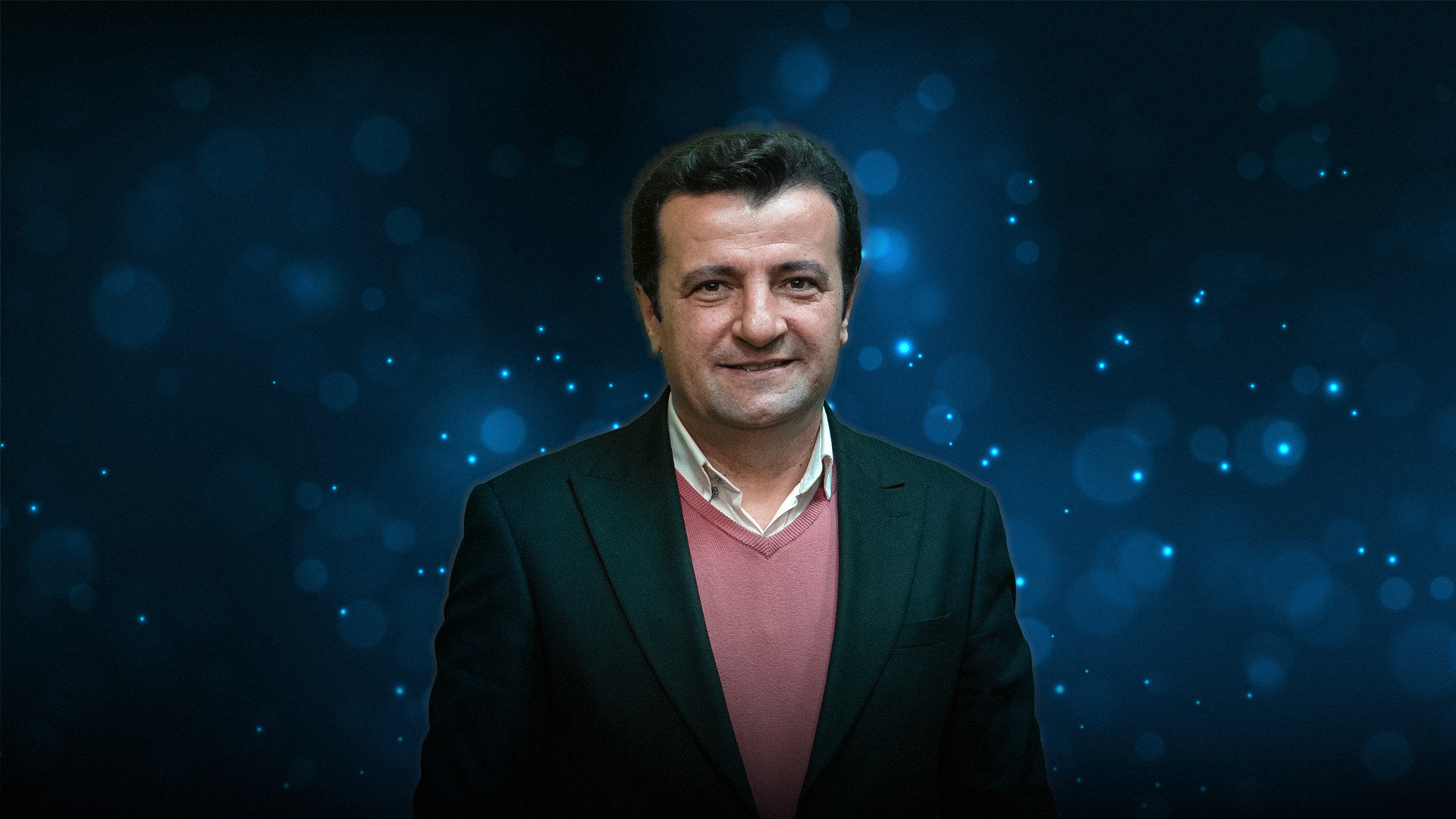
Zahra Fayzii from the Vice-Presidency for Research and Technology News Desk of the University of Tehran:
Dr. Hadi Veysi, a faculty member of the College of Interdisciplinary Studies at the University of Tehran, was selected this year as the “Outstanding Executive in Industry–University Collaboration” at the university’s annual research festival. This title reflects years of his work in commercializing artificial intelligence research and developing indigenous technologies in the field of Persian language processing.
In this interview, he points to the noticeable gap between some academic research and the real needs of society in Iran. While frontier research is undoubtedly valuable, he emphasizes that the share of problem-oriented studies aimed at solving contemporary societal challenges remains limited. In his view, academic evaluation systems sometimes steer researchers toward producing advanced scientific outputs that may have limited applicability within the domestic context.
From Sharif University to the First Persian Speech-to-Text Software
Dr. Veysi’s professional journey began during his master’s studies at Sharif University of Technology, where, together with his professors and colleagues, he developed the first Persian speech-to-text software. Released more than two decades ago, this product was the first operational system capable of converting Persian speech into text. It later led to the establishment of the company “Asr Gooyesh” and the development of the “Navisa” software—technology whose more advanced versions are now widely available in smartphones and intelligent systems.
This experience marked a turning point in his research approach—one that has consistently focused on applied research and transforming scientific achievements into practical products and services. According to him, nearly 80 percent of his research projects have been defined with a problem-solving orientation and in response to external needs.
Developing an “Organizational Intelligent Brain” through Indigenous AI
A significant portion of Dr. Veysi’s recent work has been dedicated to designing and implementing intelligent organizational assistants. These systems, built upon Persian large language models, speech recognition, text-to-speech technologies, and organizational data analytics, can function as an “organizational intelligent brain.”
One practical implementation of this technology is the deployment of an intelligent assistant at the Student Affairs Organization, enabling automated responses to inquiries, request tracking, and round-the-clock service delivery. Similar projects have been carried out in banks, industrial holdings, and large enterprises, involving advanced chatbots, AI agents, and fully localized AI systems. These systems operate on internal servers without requiring internet connectivity, ensuring data confidentiality and security.
Beyond technological development, Dr. Veysi is also active in the field of data governance and organizational digital transformation. His industrial collaborations include developing AI roadmaps, digital transformation action plans, and integrated data strategies for organizations.
Artificial Intelligence and the Future of Ethics
Dr. Veysi identifies his core expertise as artificial intelligence, particularly Persian natural language processing. He believes AI is one of the few technologies capable of challenging human cognitive superiority. In his view, the coming years will witness significant transformations in the definition of ethics, and the concept of “AI alignment” with human values will become one of the world’s key issues.
He stresses that artificial intelligence, like previous technological tools, was designed to improve human quality of life. However, its distinction lies in entering domains previously considered exclusive to human capabilities. Therefore, the future will not be shaped by opposing AI, but by mastering it intelligently.
Advice to Students: Ride the Wave of AI
Dr. Veysi’s closing message to students and researchers is clear:
“Move with the new wave of artificial intelligence—not necessarily as a programmer, but as a skilled user who can leverage AI to optimize your profession.”
He believes the future belongs to those who can employ AI as an assistant and collaborator within their own fields—whether law, art, medicine, or agriculture—and harness its capacity to create added value.
Receiving the title of “Outstanding Executive in Industry–University Collaboration” symbolizes an approach that views the university not merely as a place for publishing papers, but as a hub for generating solutions to real societal challenges—an approach that effectively bridges science, technology, and national needs.
PARS MEDEQ company and the Mossalanejad Cultural Foundation are the sponsors of Vice-Presidency for Research and Technology News Desk
Watch the interview clip with English subtitles below
Your Comment :