
"The future of journals: 'impactful research' not 'paper publication'."
The Vice-Presidency for Research and Technology News Desk of the University of Tehran:
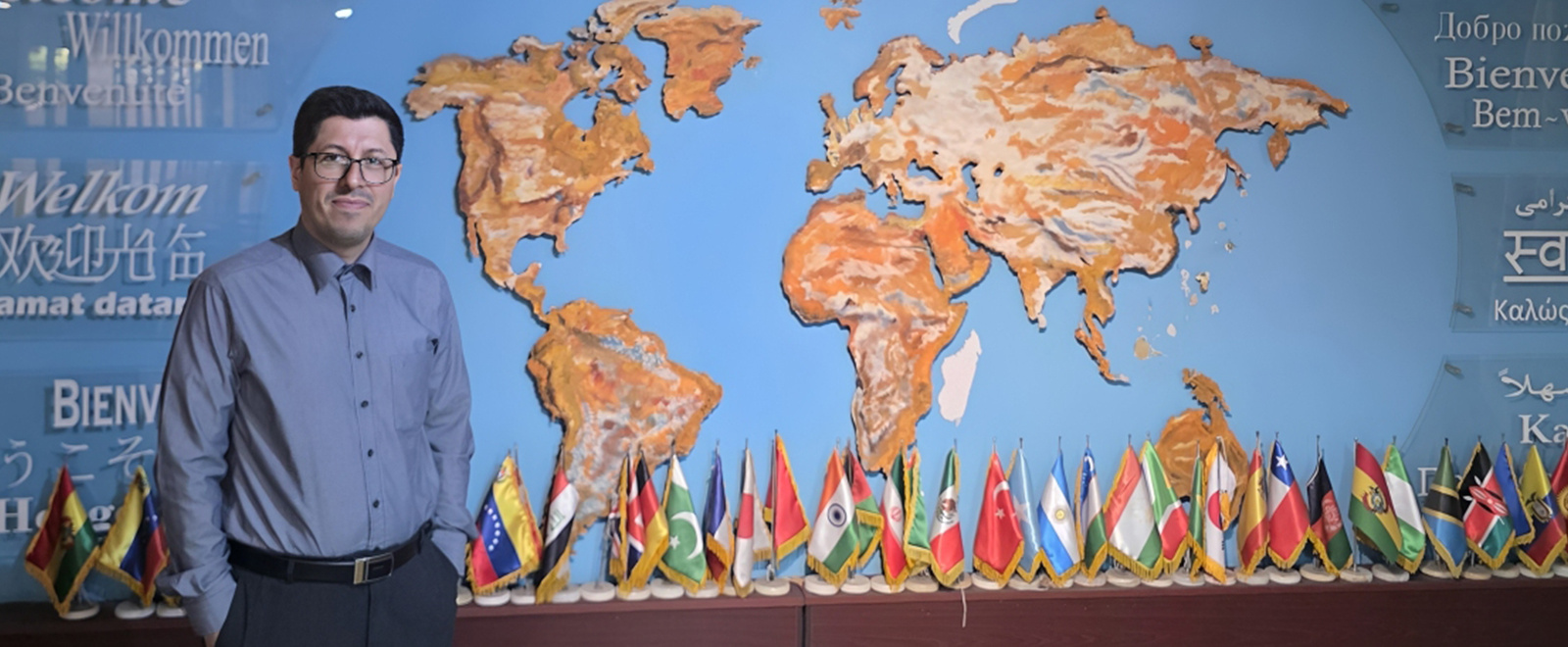
Dr. Ehsan Rasoulinezhad, Editor-in-Chief of the scholarly Journal of Countries Studies, has announced the journal’s transition from macro-level perspectives to the analysis of transnational networks, a fundamental revision of its publication policies, and its successful indexing in Scopus within two years. He emphasized that the future of academic journals depends on 'publishing impactful research' rather than 'paper publication'.
Press Office of the Vice Presidency for Research and Technology, University of Tehran:
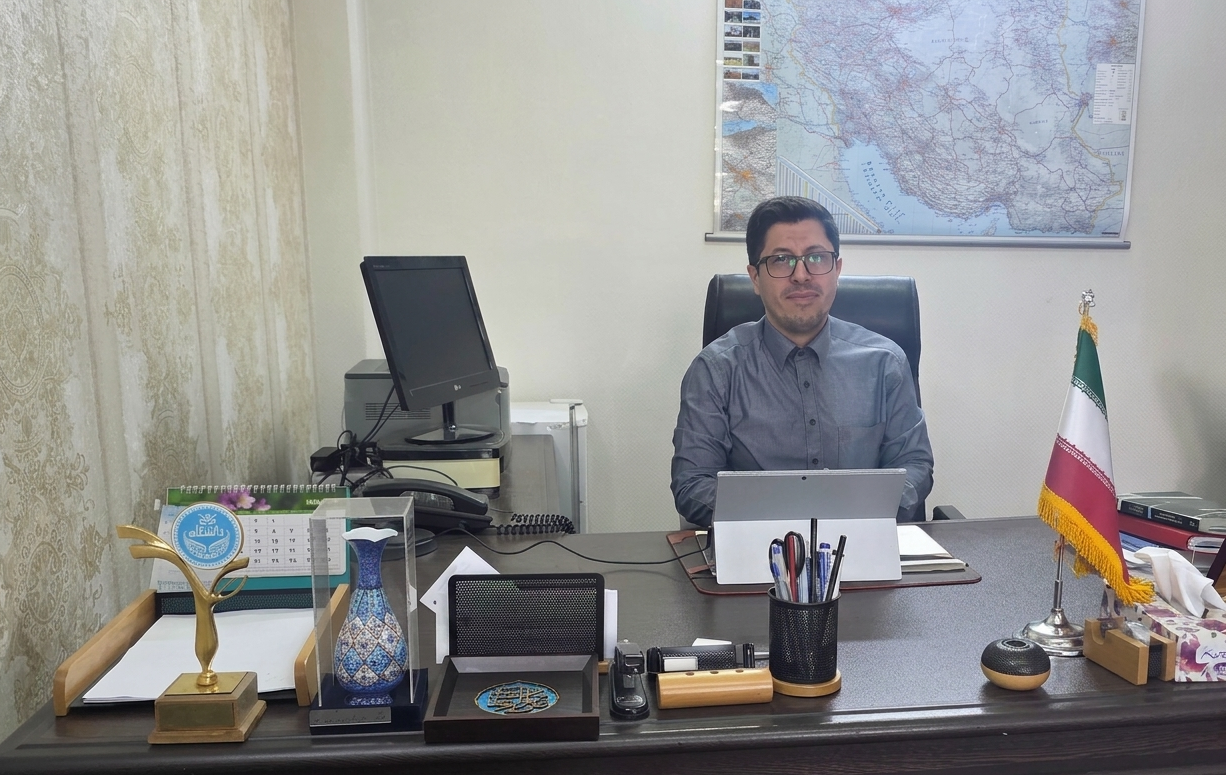
The scholarly Journal of Countries Studies, which holds a distinguished position in the field of global studies with its A-level quality rating and Scopus indexing, has undergone profound transformations over the past two years at the theoretical, methodological, and publication policy levels. Dr. Ehsan Rasoulinezhad, the journal's Editor-in-Chief, has articulated the most significant achievements and future prospects of the journal in a detailed interview.
Key Theoretical and Methodological Developments
Referring to the gradual yet profound shift from state-centric perspectives toward the analysis of transnational networks, non-state actors, and transcultural currents, Dr. Rasoulinezhad stated:
'One can no longer comprehend the complexities of today's world using outdated scientific tools. In the realm of methodology, mixed quantitative-qualitative approaches, coupled with data mining and complexity modeling, have opened up new horizons.'
He further noted that Iranian researchers must move away from merely translating Western theories and instead pursue problem-oriented and interdisciplinary research. Fortunately, the Faculty of World Studies has recognized this institutional need by establishing the Department of Transregional and Global Studies and launching programs such as 'Global Power System,' 'Globalization and Culture,' and 'Peace and Conflict Resolution.'"
Revision of Scientific and Publication Policies
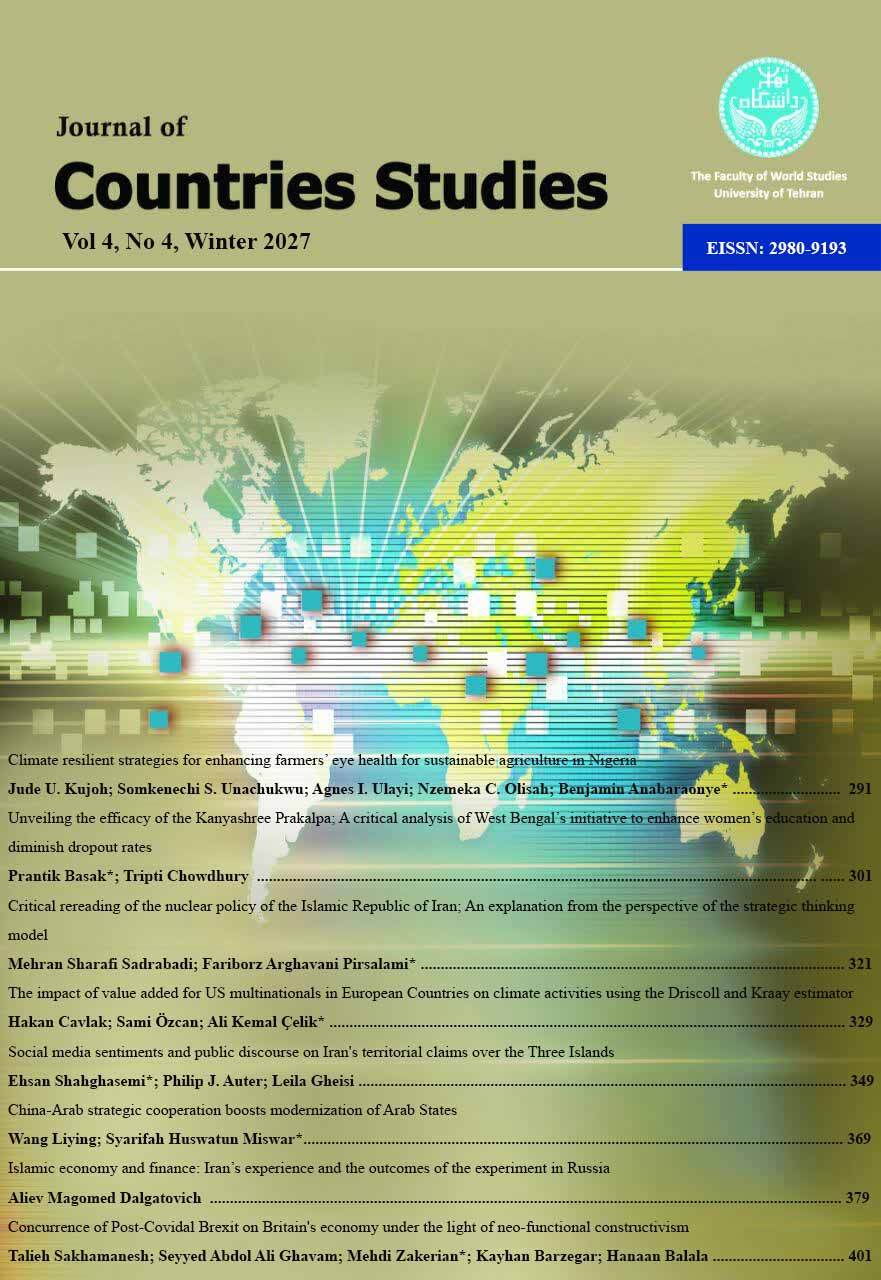 The Editor-in-Chief announced three major revisions over the past two years: increased rigor in the initial desk review process, a requirement for authors to submit raw data and analytical codes to ensure transparency, and expedited peer review procedures. He stated: "The initial assessment is completed within a maximum of two working days, and the final editorial decision is communicated to the author in less than two weeks." These policies have earned the trust of researchers from the United States, China, Singapore, Germany, Nigeria, Italy, Russia, Azerbaijan, India, Pakistan, Indonesia, France, and many other countries, who have submitted their manuscripts despite sanctions and technical challenges. According to Google Scholar data, citations to the journal's articles have grown significantly over the past two years.
Criteria for Article Acceptance
Dr. Rasoulinezhad outlined four core criteria for publication: originality of the research question, conceptual innovation, methodological robustness, and theoretical coherence. Referring to a concrete experience, he remarked:
"Even my own article, as Editor-in-Chief, was rejected during the peer review process due to a weakness in one of these criteria. This demonstrates that no unscientific practice prevails in our journal."
Standing of Iranian Researchers and Recommendations
The Editor-in-Chief assessed the standing of Iranian researchers as "relatively favorable but fluctuating." He identified their strengths as theoretical mastery of Western literature and access to unique local data. Conversely, he cited weaknesses in academic writing in English, lack of familiarity with international review processes, and excessive haste as major challenges. He advised early-career researchers to:
“Analyze the structure of at least twenty articles from their target journal, seek statistical consultation and professional language editing, and never resort to unethical intermediaries.”
Future Outlook: From Paper Publication to Impactful Research
Referring to three major transformations – the expansion of open access, the role of artificial intelligence, and the shift from citation-based metrics to social impact assessment (altmetrics) – Dr. Rasoulinezhad emphasized:
"Journals of the future will no longer be content merely with 'paper publication'; they will pursue the 'publication of impactful research.' The criterion for success is the real-world impact of research on solving societal problems, informing policy, and improving human well-being."
He expressed hope that the Journal of Countries Studies would soon be indexed in Web of Science as well.
Closing Remarks by the Editor-in-Chief
In conclusion, Dr. Rasoulinezhad stated:
"Raising a fully Persian-language quarterly journal to a Scopus‑indexed rank, in only two years, was not accidental. This achievement is the result of round‑the‑clock effort, a passion for advancing science in Iran, and the support of the Vice Presidency for Research, the University of Tehran Press, the Faculty, and my colleagues. Our greatest difficulty is the lack of a budget for translating articles, but we are determined to make a lasting contribution to the internationalization of academic research at the University of Tehran."
PARS MEDEQ company and the Mossalanejad Cultural Foundation are the sponsors of Vice-Presidency for Research and Technology News Desk
Your Comment :