From Henna to Nano: A Visiting Professor's Account of Research for Iran's Water
The Vice-Presidency for Research and Technology News Desk of the University of Tehran:
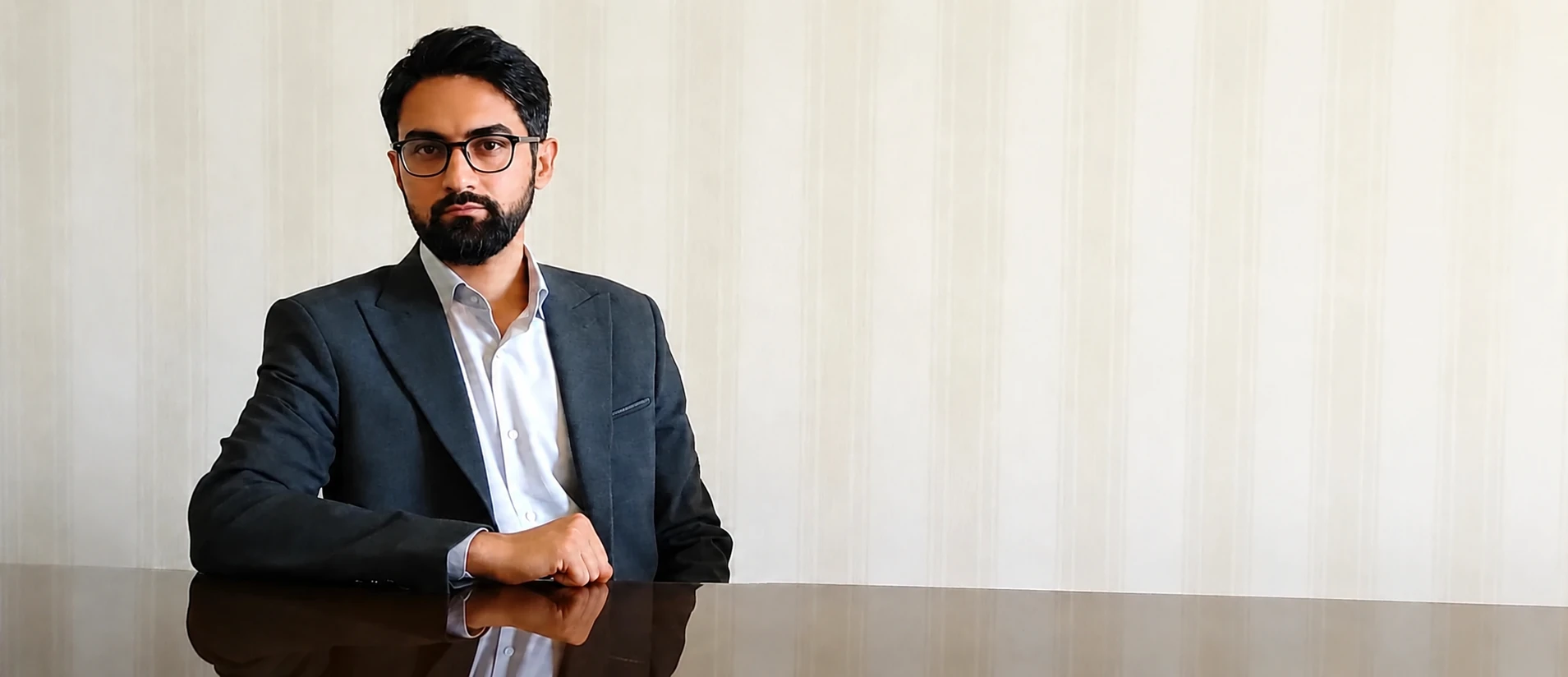
Dr. Farzin Saffari has recently visited University of Tehran as a visiting professor. He holds a PhD in Environmental Engineering and New Energy Technologies from Tsinghua University, China. In addition, he completed his master’s degree in the same field at Istanbul Technical University, Turkey, and his bachelor’s degree in Chemical Engineering at the Petroleum University of Technology, Iran. Before joining the University of Tehran as a visiting professor, he was a postdoctoral researcher at KU Leuven, Belgium. His research focuses on the design of advanced materials and the development of separation technologies for desalination, water purification, resource recovery, water and wastewater treatment, and water recycling.
Activities and Achievements
During my time at the University of Tehran, with the support of the Connect platform and by hosting of Dr. Sarrafzadeh, I undertook a broad range of teaching, research, and administrative activities. These include delivering the graduate course of “Advanced Environmental Engineering”, managing the Water Recycling Laboratory, supervisinh postgraduate students, drafting research and industrial proposals, leading scientific field visits to a major water treatment plant, and carrying out joint projects with research groups in Iran and abroad. My work during this period has resulted in publications in Environmental Science: Water Research & Technology and ACS Electrochemistry, and I have been honored to receive the Young Scientist Fellowship from the Mustafa (pbuh) Science and Technology Foundation and COMSTECH.
Highlighted Research Findings
In collaboration with groups at Tsinghua University and Jingdezhen Ceramic University, my colleagues and I identified a new structural parameter as called “pore surface curvature” at the angstrom and sub-nanometre scale, which significantly influences ion removal and desalination performance in capacitive deionization systems. Through atomic and molecular simulations, we first discovered how this curvature alters mass transfer in confined, sub-nanometre spaces; we then built interpretable AI models on experimental data that provided firm evidence for its impact (DOI: 10.1021/acselectrochem.5c00126).
In another study, working with the Petroleum University of Technology, Iran, and RMIT University, Australia, we tackled biofouling in reverse osmosis membranes. Instead of relying on costly and toxic synthetic chemicals, we turned to traditional knowledge and modified membrane surfaces with plant extracts such as henna and woad. Henna extract showed particularly impressive results, achieving long-term biofilm inhibition while maintaining both salt rejection and water flux (DOI: 10.1039/D5EW01127B).
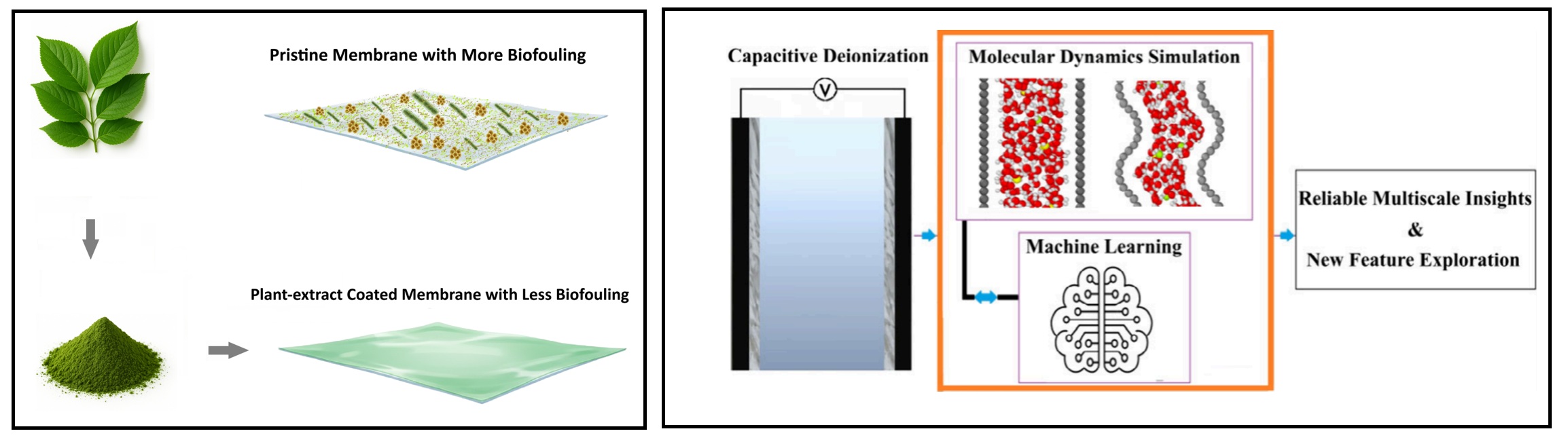 (Left) Graphical abstract for our study on green reverse osmosis membrane modification with plant extracts (Right) Graphical abstract for our study on capacitive deionization
Motivation, Opportunities and Reflections
My decision to come to Iran as a visiting professor was built on four goals: understanding the country’s technological needs, gaining insight into its scientific governance, staying connected with the younger generation, and team-building within the Iranian scientific community. The water-resource nexus has always been at the heart of my research. Water is a key factor for a water-stressed country like Iran.
During this period, I became acquainted with two valuable mechanisms here: the alternative method to perform the mandatory service program in startup companies, and the LabsNet laboratory network, which provides subsidized access to research equipment across the country. I personally used LabsNet for most of my analytical work, though I faced some limitations with XPS and surface zeta potential analyses.
When I think about the academic environment, I see great potential in diversifying degree formats such as work-integrated PhD program for the employed students, full-time industrial PhD program, direct-entry PhD program from bachelor’s degrees for talented students, joint PhD networks bridging universities and industry, theme-based clusters such as water resource management, and replacing useless courses with challenge-based learning style courses.
Research Opportunities and Social Responsibility
Technical limitations can be very real, but if managed correctly, they become powerful drivers of innovation. I believe research at the energy-environment-food nexus is no longer merely an academic choice; it is a strategic necessity that demands interdisciplinary, multifaceted solutions. There are exciting research opportunities in areas like industrial and process IoT, process digital twins, clean hydrogen, carbon capture, and microbial enhanced oil recovery.
What ultimately drives me is a sense of social responsibility and a desire to create a tangible, lasting impact. As an ordinary citizen who has simply focused on a specialized topic through all the difficulties, interruptions and dead ends along the way, I try by understanding myself and the real needs of the society, to stand at a point in my professional ecosystem where I can find, or create, an opportunity that makes the most meaningful and enduring contribution to the present and future of this country.
PARS MEDEQ company and the Mossalanejad Cultural Foundation are the sponsors of Vice-Presidency for Research and Technology News Desk
Your Comment :