
Emphasizing the Role of Research and Field-Based Education, Alongside Conventional University Instruction, in Enhancing Understanding of Iranian Architecture and Preserving the Nation’s Architectural Heritage
Zahra Fayzii from the Vice-Presidency for Research and Technology News Desk of the University of Tehran:
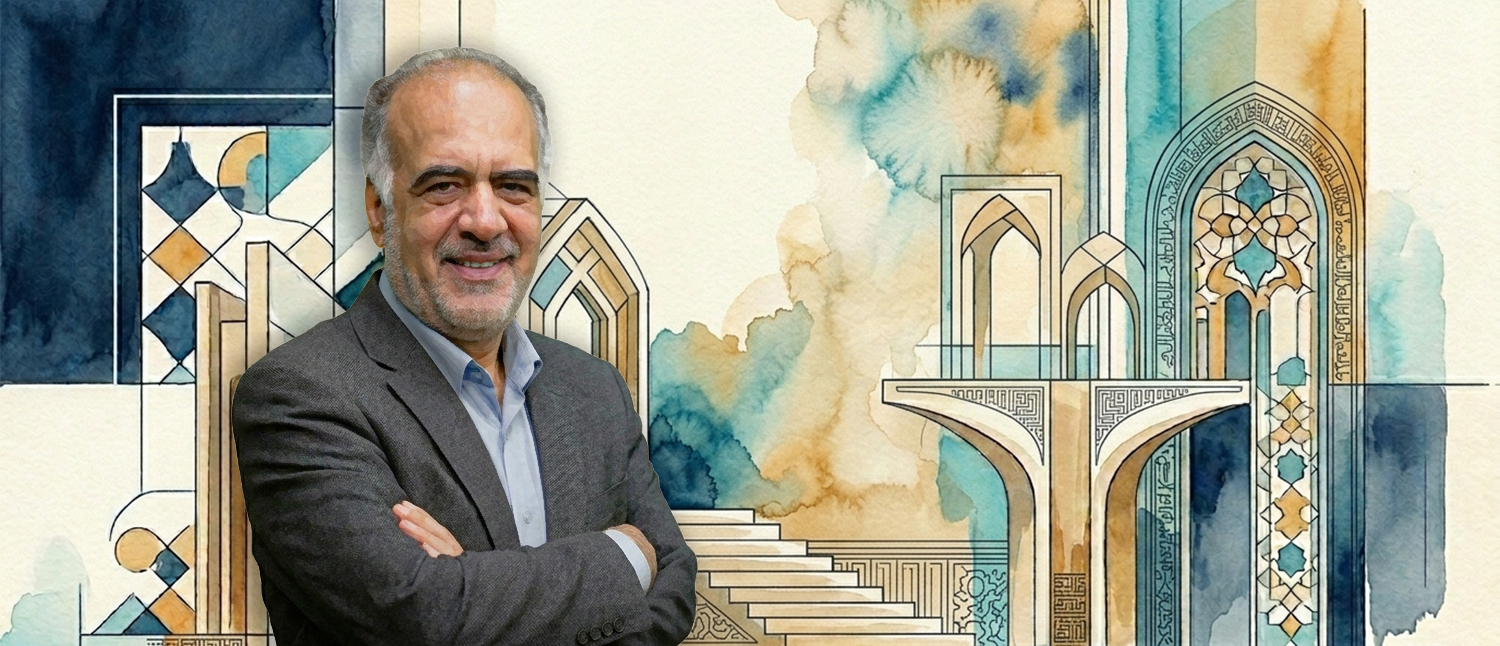
Dr. Mohammad Hassan Khademzade, Associate Professor at the Faculty of Architecture, University of Tehran, and recipient of the University of Tehran’s Research Festival Award for Excellence in Industry and Community Engagement, discussed his most significant research, educational, and professional activities in an interview. He emphasized the necessity of strengthening the connection between universities, society, and cultural heritage in order to advance knowledge of Iranian architecture and safeguard the country’s historical monuments.
Referring to his many years of work in the study and restoration of historic buildings and urban fabrics, Dr. Khademzade identified the restoration of the Shahi Chaharsooq and the Amir Chakhmaq urban complex in the city of Yazd as among his most notable projects. He explained that these initiatives were carried out based on comparative studies, examination of historical documents, and technical and structural analyses. His other activities include research on Iranian architecture, documentation of numerous historic buildings, and the restoration and revitalization of dozens of historic houses, water reservoirs, qanats, and other valuable structures in Yazd, all undertaken with the aim of preserving their authenticity and restoring vitality to them.
Dr. Khademzade also highlighted the role of field-based education in training students. He noted that organizing specialized workshops in villages and cities across Iran has provided students with opportunities to learn methods for studying and understanding Iran’s vernacular and national architecture, techniques for recording and documenting architectural heritage, and approaches to engaging with local communities. The outcomes of these activities have been published in several books and scholarly works, contributing to the advancement of knowledge in Iranian architectural studies as well as in conservation and restoration practices.
He further discussed research conducted on the tilework of the Dome of Soltaniyeh, describing the project as an effort to develop scientific and practical solutions for the conservation of this exceptional monument and to address its preservation challenges. He also referred to his experience in the renovation and improvement of the Islamic-period section of the National Museum of Iran, emphasizing the importance of employing modern technologies in the management, conservation, and presentation of historical artifacts in contemporary museum practice.
Emphasizing the importance of drawing upon the capacities of Iranian architecture in contemporary design, Dr. Khademzade argued that architectural development should respond to present-day needs while remaining rooted in the nation’s historical and cultural identity and inspired by authentic vernacular and national traditions. He added that a thorough understanding of the context, history, and characteristics of each historical monument, as well as the community in which it is situated, is a prerequisite for any intervention or decision-making process in architecture and restoration.
In conclusion, he identified rigorous research and a deep understanding of issues as the most important factors for success in both academic and professional projects. He stated that effective collaboration among universities, specialists, executive institutions, and society can create the conditions necessary for the sustainable preservation of cultural heritage and its transmission to future generations.
PARS MEDEQ company and the Mossalanejad Cultural Foundation are the sponsors of Vice-Presidency for Research and Technology News Desk
Your Comment :