
Tracking Pollutants and Diseases with Smart Sensors
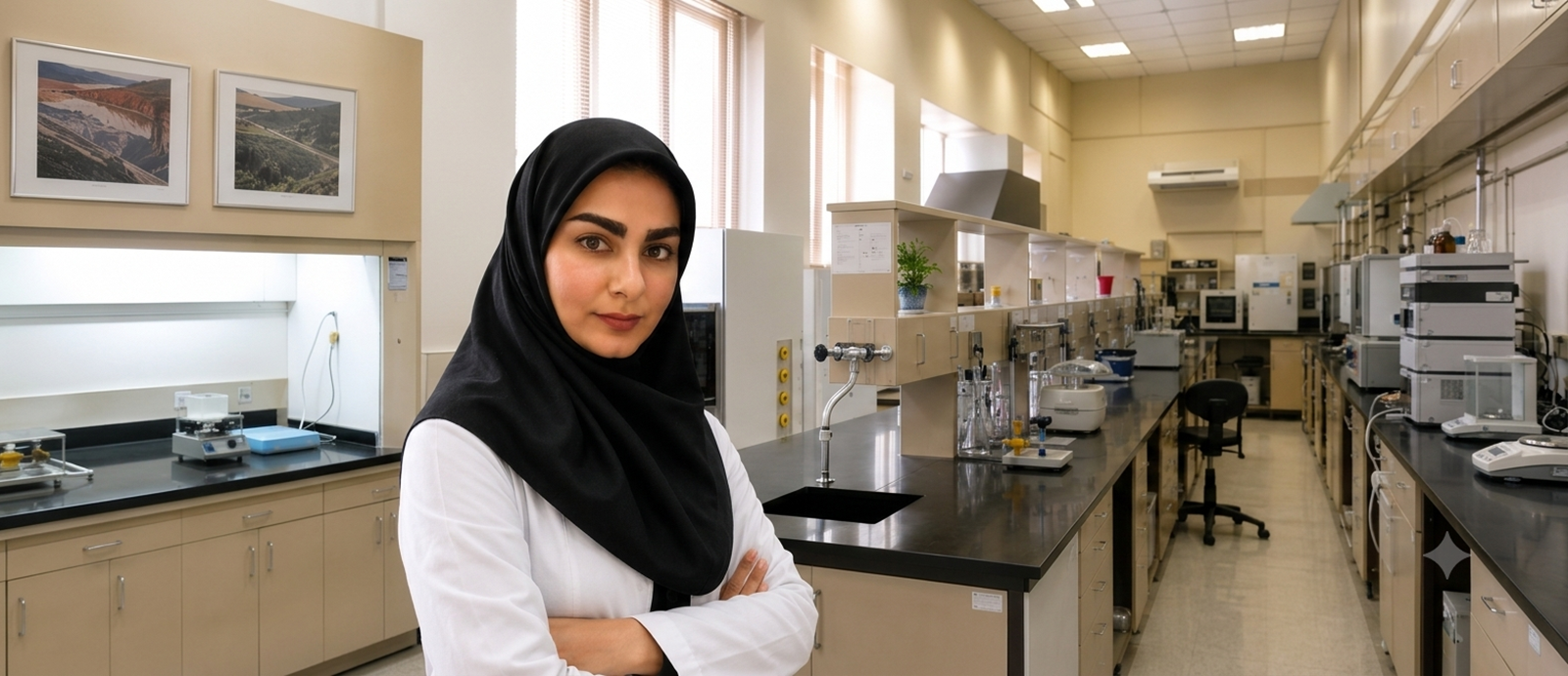
The Vice-Presidency for Research and Technology News Desk of the University of Tehran:
Dr. Samira Mehravar, a postdoctoral researcher at the University of Tehran, is advancing a nanotechnology-based platform that combines engineered nanomaterials with smart sensing strategies to improve environmental monitoring and non-invasive disease detection. By integrating functional nanostructures with multivariate data analysis, the technology aims to provide faster, more accurate, and more reliable detection of volatile organic compounds (VOCs).
News Desk of the Vice Presidency for Research and Technology, University of Tehran:
Dr. Samira Mehravar, a postdoctoral researcher at the School of Chemical Engineering, University of Tehran, is conducting research focused on developing innovative technologies based on engineered nanomaterials to address challenges in energy, environmental protection, and healthcare.
Reflecting on her previous research experience, she noted that her first postdoctoral project focused on the design of advanced nanocatalysts for greenhouse gas conversion. This work resulted in a patented catalyst technology that, through optimized surface engineering and active-site interactions, produced approximately 20% more hydrogen than the industrial FCR-4 catalyst during methane dry reforming while using a lower amount of active metal. The outcomes of this research were published in two ISI-indexed journal articles.
Developing a Smart Platform for Pollutant Monitoring
Dr. Mehravar's current research is being carried out in the Adsorption Laboratory of the School of Chemical Engineering under the supervision of Dr. Shohreh Fatemi. The project is entitled:
“A Nanotechnology-Based Platform Utilizing Quartz Crystal Microbalance Sensor Arrays with Nanostructured Coatings for Non-Invasive Detection and Monitoring of Volatile Organic Compounds in Medical and Industrial Applications.”
According to Dr. Mehravar, the detection of many environmental pollutants and breath-borne biomarkers associated with metabolic disorders still relies on complex, expensive, and time-consuming analytical instruments. This challenge inspired the development of a strategy aimed at enhancing the performance of quartz crystal microbalance (QCM) sensors for the detection of trace concentrations of volatile organic compounds.
The platform employs tailored nanostructured coatings and molecularly imprinted polymers (MIPs) to strengthen interactions between target molecules and sensor surfaces, thereby improving sensitivity and selectivity.
The Role of Intelligent Systems in Enhancing Sensor Accuracy
 This researcher from the University of Tehran, highlighting the distinction between this novel approach and conventional pollutant measurement techniques, stated:
“In traditional methods, sensor output is typically limited to a single response. In contrast, the intelligent approach enables the simultaneous analysis of a set of sensor responses.”
She further explained:
“This project focuses on extracting multivariate patterns from the responses of different coatings—an approach that enhances discrimination capability, minimizes the influence of interfering factors, and improves the reliability of the results. This achievement can pave the way for the development of faster, more accurate, and more reliable monitoring tools in the fields of environmental science and public health.”
A Novel Achievement in Integrating Nanomaterials and Data Analytics
Dr. Mehravar described the project’s key achievement as the development of an innovative framework for enhancing the performance of quartz crystal sensors through the integration of engineered nanomaterials and multivariate data analysis.
She stated:
“Within this framework, scattered sensor responses are transformed into meaningful and interpretable patterns. This approach is aligned with emerging trends in intelligent monitoring and offers significant potential for diagnostic and environmental applications.”
Broad Applications in Health and Environmental Monitoring
According to the researcher, the developed technology has wide-ranging applications across various fields, including air quality monitoring, control of volatile pollutants, enhancement of safety in industrial environments, and the development of non-invasive health monitoring methods based on breath analysis.
She added:
“This technology can play a particularly significant role in the diagnosis of metabolic diseases through the analysis of compounds present in human breath. Moreover, the interdisciplinary nature of this project provides a platform for collaboration and synergy among the fields of nanotechnology, chemical engineering, and data science.”
Future Outlook and Commercialization Prospects
Dr. Mehravar, in conclusion, identified the next steps of this research as the development of target-specific coatings, evaluation of system performance under real-world conditions, and the refinement of data analysis models.
She stated:
“The long-term vision of this project is to develop intelligent monitoring systems capable of delivering accurate, rapid, and reliable information, while moving toward the commercialization of the technology in health and environmental sectors. This technology has the potential to play a significant role in improving quality of life and advancing next-generation diagnostic and monitoring tools.”
PARS MEDEQ company and the Mossalanejad Cultural Foundation are the sponsors of Vice-Presidency for Research and Technology News Desk
Your Comment :