A New Step Toward Chemical Stain-Free Medical Imaging
The Vice-Presidency for Research and Technology News Desk of the University of Tehran:
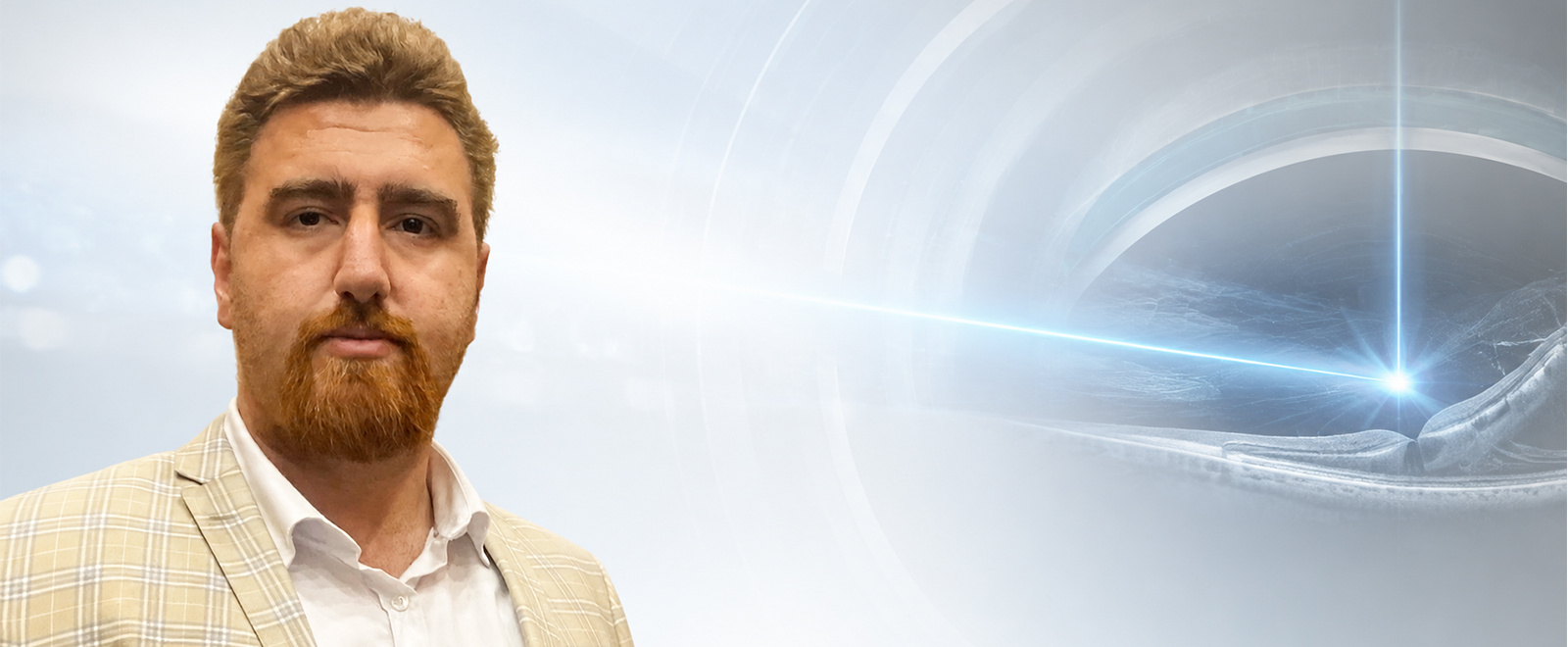
Dr. Mohammad Hossein Salimi, Assistant Professor in the Department of Biomedical Engineering and Tissue Engineering at the Faculty of Interdisciplinary Sciences and Technologies, University of Tehran, announced the design and development of two advanced medical imaging systems. He said that, under a memorandum of understanding signed with the National Elite Foundation, the design and development of an advanced imaging system called Optical Coherence Tomography (OCT) is currently underway.
He also referred to the implementation of the “Connect” project, aimed at building communication and collaboration with elites living abroad, and said that before this project, he had advanced the design of another advanced imaging system at the University of Tehran in collaboration with Dr. Bahman Vahidi, a faculty member at the Faculty of Interdisciplinary Science and Technologies. The full interview follows.
Salimi, speaking about the need to develop this technology, identified the early detection of diseases as one of the major challenges in medical diagnosis — a stage at which tissue changes are still very subtle and difficult to detect using many conventional methods.
According to him, in histopathology, examining samples usually requires tissue extraction (biopsy), laboratory preparation, and chemical staining; steps that are not only time-consuming, but may also carry the risk of damaging the sample, altering the natural structure of the tissue, and limiting the detection of very subtle molecular changes. On the other hand, in many diseases, especially in the early stages, tissue changes occur at the microscopic or molecular level and are not easily identifiable by conventional methods.
He added:
“The idea of designing this system emerged as a response to these challenges. The main goal of this platform is to achieve a method that can provide precise structural and molecular information from tissue without the need for chemical staining and with minimal sample manipulation.”
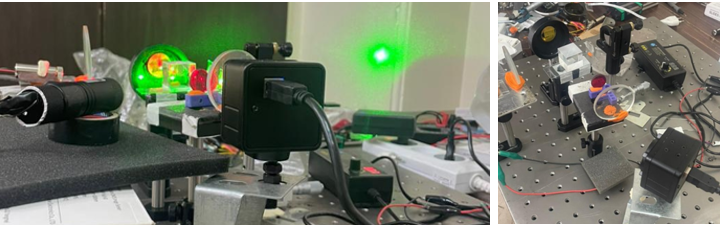
Different Views of the Custom-Designed and Fabricated Device Based on the Laser Speckle Photothermal Stimulation Technique for Stain-Free Histology
The Assistant Professor of Biomedical Engineering and Tissue Engineering at the University of Tehran, referring to the design of the “Multi-wavelength Photothermal Speckle Modulation” imaging system, said that the main innovation of this system lies in the use of photothermal stimulation with lasers at different wavelengths.
He explained that since different molecules exhibit distinct absorption and optical behaviors at different wavelengths, this method makes it possible to extract chemical and molecular information from tissue and convert it into an analyzable image. According to him, this system can provide a kind of “virtual staining” and, without the need for conventional laboratory procedures, pave the way for faster and more accurate diagnosis, especially early disease detection.
Salimi said that the prototype of this device was designed and built with the collaboration of two master’s students on the research team, and that the system has been tested with very promising results.
He added that in the initial stages, the tests were carried out on laboratory-made artificial tissue samples as well as excised tissues, and the results were successful. Scientific papers derived from this project are also in the process of being published in reputable international journals.
Regarding the Optical Coherence Tomography (OCT) system, he said: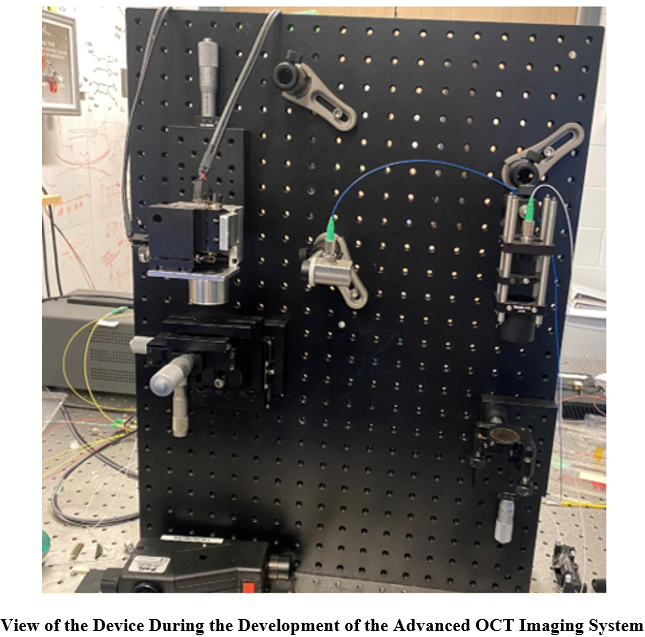
“This technology enables high-resolution, non-invasive imaging of internal tissue structures, and its development can play an important role in the faster and more accurate diagnosis of many diseases, particularly in fields such as ophthalmology, histology, and biomedical imaging.”
According to him, indigenizing this technology can help reduce costs, increase access for research and medical centers to advanced equipment, and strengthen the country’s medical technology infrastructure.
Referring to the research team’s future plans, Salimi said that now that the design and initial testing phases of the systems have been completed, they plan to take advantage of commercialization opportunities in science and techno
logy parks, especially the University of Tehran Science and Technology Park. Participation in specialized events and exhibitions to expand scientific and industrial cooperation, grow the research team, and identify new opportunities are among the upcoming plans as well.
In closing, he emphasized that one of the research team’s main goals is the commercialization and production of indigenous devices in the field of medical imaging.
PARS MEDEQ company and the Mossalanejad Cultural Foundation are the sponsors of Vice-Presidency for Research and Technology News Desk
Your Comment :