
From Positive Psychology to Scientific Approaches to Strengthening Ethics: A Lifetime of Research in Psychology
Zahra Fayzii from the Vice-Presidency for Research and Technology News Desk of the University of Tehran:
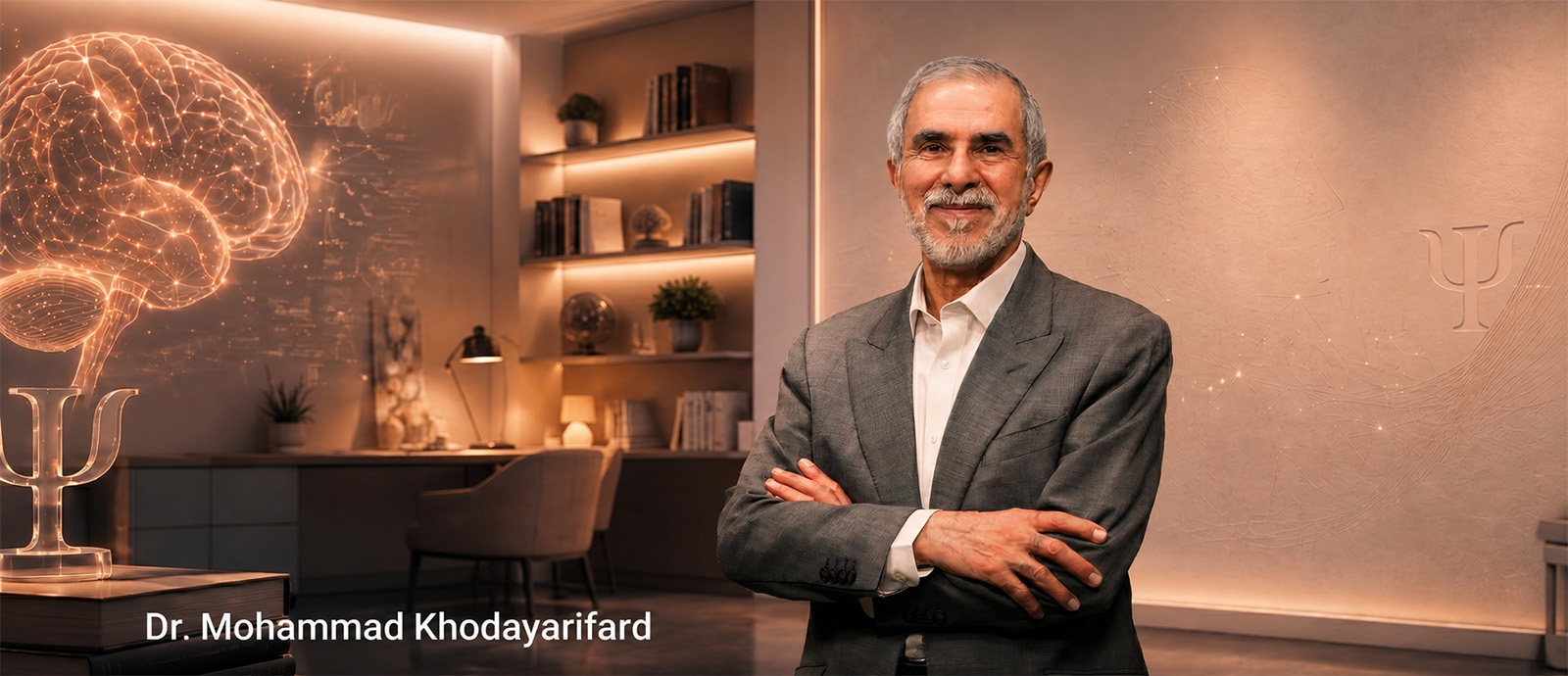
Dr. Mohammad Khodayari-Fard, a retired faculty member of the Faculty of Psychology and Educational Sciences at the University of Tehran and a distinguished senior scholar of the university, is one of Iran’s prominent figures in the field of psychology. A significant part of his academic and research career has focused on positive psychology, psychotherapy, clinical psychology, and child and adolescent psychology.
He was selected as a Distinguished Senior Scholar of the University of Tehran at the university’s Research Festival—an honor that reflects decades of academic, educational, and research activities, as well as his sustained efforts to advance psychological science and train successive generations of specialists in the field.
Research Focused on Understanding Human Strengths
One of the central areas of Dr. Khodayari-Fard’s academic work has been positive psychology and the study of human strengths and capabilities. In a number of his research projects and articles, he has examined how many individuals fail to recognize their own potential and how their strengths can sometimes be identified through the perspectives and feedback of others.
From his perspective, positive psychology is not limited to theoretical concepts. Scientific methods can be used to identify individual strengths and develop strategies to enhance them. This approach has been an important part of his research activities in psychology.
Throughout his academic career, Dr. Khodayari-Fard has also engaged with prominent international figures in the field, including Martin Seligman, one of the founders of positive psychology, and Professor Nossrat Peseschkian, a leading figure in positive psychotherapy, drawing on their experiences and perspectives.
From Psychotherapy to Child and Adolescent Psychology
Another significant area of Dr. Khodayari-Fard’s academic work is psychotherapy and clinical psychology. He emphasizes the importance of accurately identifying psychological problems and distinguishes between common psychological difficulties and serious mental disorders, stressing the need for evidence-based psychotherapy and, when necessary, specialized treatment.
Child and adolescent clinical psychology is another major area of his work. This field has been reflected in his academic publications and books, including works addressing the psychopathology of children and adolescents.
“Nothing Is More Important Than the Family”
Dr. Khodayari-Fard considers the family to be the most important environment for human development, personality formation, and mental health. From his perspective, individuals are born into families, grow within families, and often develop psychological difficulties within the context of family relationships.
For this reason, he argues that psychological problems among children and adolescents cannot be fully understood without examining family circumstances and relationships among family members. Drawing on his professional experience, he has repeatedly emphasized the importance of emotional needs, attention, and communication within families, noting that neglecting these needs can eventually contribute to serious psychological difficulties.
This perspective places the family not merely as a shared living environment, but as one of the most influential factors shaping mental health, personality development, and behavioral patterns.
Research as a Collective Effort, Not an Individual Endeavor
A defining feature of Dr. Khodayari-Fard’s research career is his strong emphasis on collaborative research. He believes that complex scientific issues cannot always be adequately addressed from the perspective of a single specialist, and that cooperation among experts from different fields can lead to deeper and more accurate results.
With a history spanning more than three decades, his research team represents this collaborative approach. The team brings together specialists from different fields who work collectively on a range of scientific and research projects.
One of the group’s major projects is research and the preparation of a book on “Ethics in Higher Education.” The project involves specialists in psychology, sociology, social sciences, and religious studies and seeks to examine ethics in higher education from multiple academic perspectives.
In Dr. Khodayari-Fard’s view, differences in political, social, and religious perspectives should not prevent scientific collaboration. Scientific dialogue, mutual respect, and a shared focus on research questions can bring scholars with different viewpoints together.
Emphasis on Ethics and Scientific Development
Ethics is another important focus of Dr. Khodayari-Fard’s academic work. His research has addressed issues related to ethics and scientific approaches to strengthening ethical behavior, seeking to move the discussion of ethics beyond general recommendations and toward systematic, evidence-based study.
The combination of his work in positive psychology, psychotherapy, clinical psychology, child and adolescent psychology, and ethics has shaped an important part of his academic legacy at the University of Tehran. Alongside decades of teaching and training students, these contributions formed part of the path that led to his recognition as a distinguished senior scholar of the university.
Dr. Mohammad Khodayari-Fard’s academic career reflects decades of sustained efforts to advance psychology in Iran—a journey that moves from the study of human strengths and capabilities to mental health and psychotherapy, places the family and the child at the center of attention, and ultimately emphasizes the importance of ethics, scientific collaboration, and teamwork in the advancement of knowledge.
PARS MEDEQ company and the Mossalanejad Cultural Foundation are the sponsors of Vice-Presidency for Research and Technology News Desk
Watch the interview clip with English subtitles below
Your Comment :