
From a University of Tehran Laboratory to Global Standards

Zahra Fayzii from the Vice-Presidency for Research and Technology News Desk of the University of Tehran:
Farshid Chini, a Ph.D. in Mechanical Engineering from the University of Tehran and a faculty member at the university, discussed his academic and industrial journey, emphasizing that one of the most important achievements of a university professor is the training of skilled and capable human resources. He also highlighted the need to strengthen the connection between universities, industry and entrepreneurship.
Speaking about his work in nanotechnology and surface engineering, Chini discussed the development of several technology-based companies and university spin-offs originating from his laboratory. These companies operate in areas including laboratory equipment, silicone coatings, construction paints and coatings, air conditioning systems and water treatment.
Criticizing an exclusively paper-oriented approach to higher education, he emphasized that students should not be trained solely to publish academic papers. Instead, they should be equipped to use their knowledge to solve real-world problems and create economic value. In his view, a university fulfills its true mission when its graduates are capable of creating jobs for themselves and others.
Chini also reflected on his experience of studying and working in Canada before returning to Iran and beginning his industrial activities from a small laboratory. According to him, the journey began with building equipment that the laboratory itself needed and eventually led to the establishment of several companies and the development of technology-based products.
The University of Tehran academic described nanotechnology and surface engineering as tools for addressing real industrial challenges, including corrosion, icing, surface contamination, adhesion and material durability. He also spoke about Iran’s participation in the development of international nanotechnology standards, describing the development of an international standard for superhydrophobic coatings as one of the country’s significant scientific achievements.
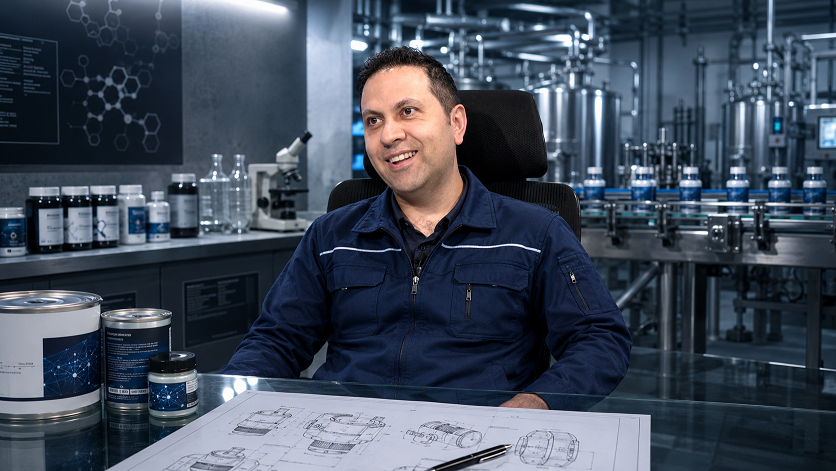 In another part of the interview, Chini described standardization as an important dimension of global economic competition. He explained that countries that help establish international standards can, in many cases, influence market rules and the competitive landscape. Drawing on his experience in international standardization meetings, he discussed efforts to ensure that Iranian scientific achievements are recognized at the global level.
The academic also spoke about the damage sustained by one of his industrial facilities during the war and its economic consequences, including reduced production, infrastructure damage and workforce reductions. Nevertheless, he emphasized that he had learned how to build from the ground up and would continue working to rebuild and restore his industrial activities.
Chini further emphasized individual responsibility as a key factor in social progress. He argued that when people encounter a problem, the first person responsible for taking action should be themselves, calling for a shift away from a culture of simply waiting for others to solve problems.
He also stressed the importance of retaining the country’s scientific talent and creating conditions in which students and skilled professionals can use their knowledge domestically to solve problems, build businesses and create wealth. In his view,:
"Universities should move beyond producing graduates who are primarily trained to publish papers and instead educate individuals capable of transforming knowledge into technology, products and economic value."
PARS MEDEQ company and the Mossalanejad Cultural Foundation are the sponsors of Vice-Presidency for Research and Technology News Desk
Watch the interview clip with English subtitles below
Your Comment :