
Technical and Scientific Achievements of the National Seismological Center
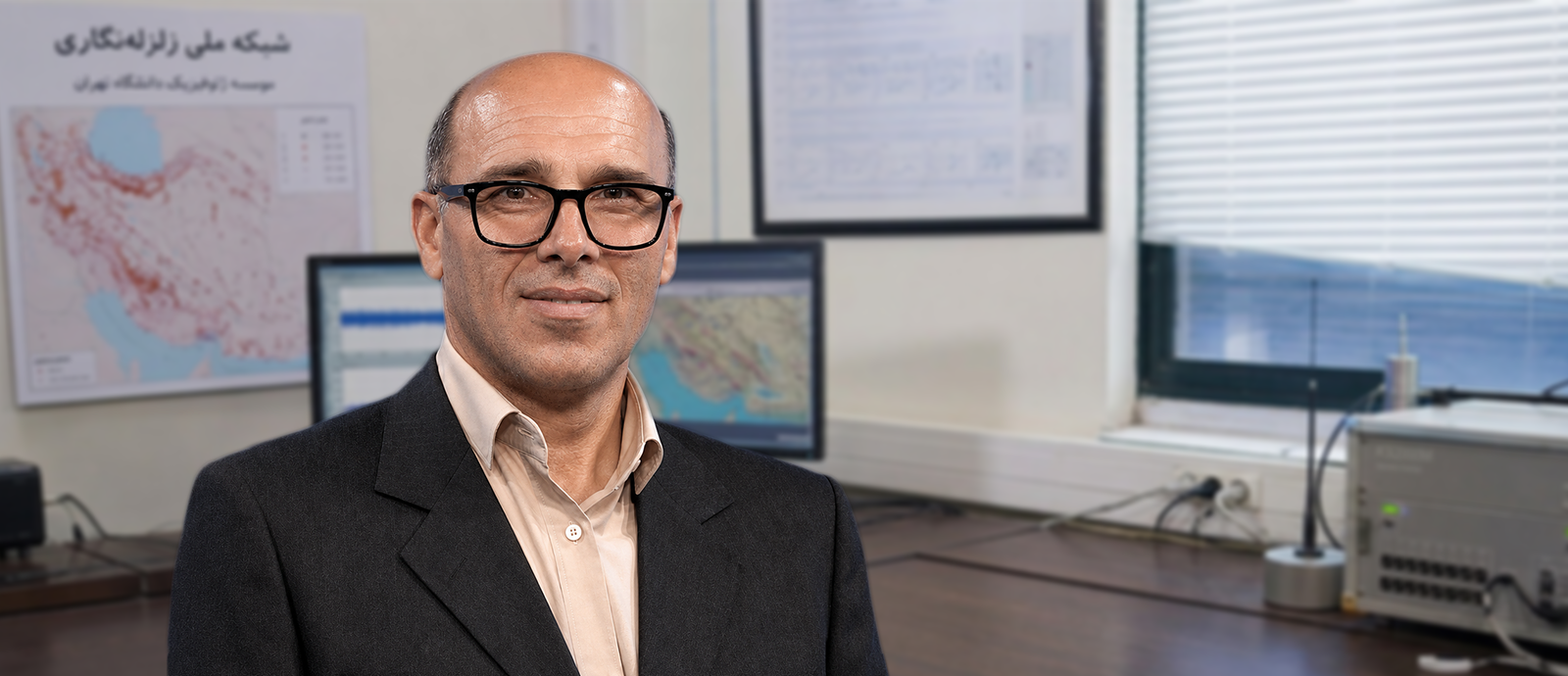
Zahra Fayzii from the Vice-Presidency for Research and Technology News Desk of the University of Tehran:
Hamid Habibi, Technical Support Manager at the National Seismological Center of the Institute of Geophysics, University of Tehran, outlined the center’s major technical and scientific achievements in expanding Iran’s seismic monitoring network, localizing the technology for installing and operating seismic stations, enhancing earthquake monitoring infrastructure, and strengthening the country’s disaster management systems.
Expansion of the National Seismic Monitoring Network with More Than 130 Active Stations
One of the National Seismological Center’s most significant achievements has been the expansion of Iran’s national seismic monitoring network.
According to Habibi, the network currently operates approximately 130 seismic stations, organized into eight regional centers, 20 local seismic networks, four single-station bases, and one borehole seismic station, providing continuous 24-hour monitoring. The network covers a substantial portion of the country’s seismically active regions and transmits seismic data to the central monitoring facility in real time. These data serve as the foundation for seismological analysis, scientific research, and one of the country’s most important infrastructures for earthquake disaster management.
Complete Localization of Seismic Station Installation, Operation, and Maintenance
Habibi identified the achievement of full domestic capability in installing, operating, maintaining, and servicing seismic stations as one of the center’s greatest accomplishments in recent years.
He explained that while these tasks were previously carried out by foreign specialists, Iranian experts now independently perform every stage—from site selection and geological investigations to structural design, equipment installation, communication system deployment, and even specialized maintenance of seismic instruments.
Advanced Monitoring Infrastructure with Smart and Reliable Seismic Stations
Habibi explained that each seismic station consists of ultra-sensitive sensors, digital recording systems, communication equipment, solar panels, batteries, protective structures, and other supporting components.
He added that the stations are designed to ensure uninterrupted operation. Even if communication links are temporarily lost, seismic data are securely stored in the station’s internal memory for several months and are automatically transmitted once communication is restored, significantly improving the reliability and resilience of the national seismic monitoring network.
Expansion of Seismic Stations at Universities and Research Institutions
Another major development program of the National Seismological Center is the establishment and expansion of seismic stations at universities and research institutions across the country.
According to Habibi, seismic stations have already been installed and commissioned at the University of Urmia and Arak University. Additional stations are being developed at Kharazmi University, Razi University of Kermanshah, Golestan University, and in several Free Trade Zones. These initiatives not only improve equipment security but also strengthen nationwide seismic coverage and expand scientific and research collaboration.
Commissioning Strategic Seismic Stations on Qeshm and Kish Islands
Among the center’s recent achievements is the establishment of strategic seismic stations on Qeshm and Kish islands.
Habibi noted that these stations are key components of Iran’s National Seismic Network and play a vital role in monitoring seismic activity across southern Iran, the Persian Gulf coastline, and offshore regions.
The Role of Seismic Data in Disaster Management and Future Research
Habibi emphasized that the primary mission of the seismic monitoring network is the accurate recording of earthquakes and the generation of high-quality scientific data for researchers, scientific institutions, and national disaster management authorities.
He added that expanding the number of seismic stations will further strengthen Iran’s national seismic database, enabling more advanced seismological research, improved understanding of fault behavior, more accurate seismic hazard assessments, and the continued enhancement of disaster management and future earthquake early-warning capabilities.
PARS MEDEQ company and the Mossalanejad Cultural Foundation are the sponsors of Vice-Presidency for Research and Technology News Desk
Watch the interview clip with English subtitles below
Your Comment :