
Geopersia on the Path to Enhancing Its International Standing in Geosciences
The Vice-Presidency for Research and Technology News Desk of the University of Tehran:
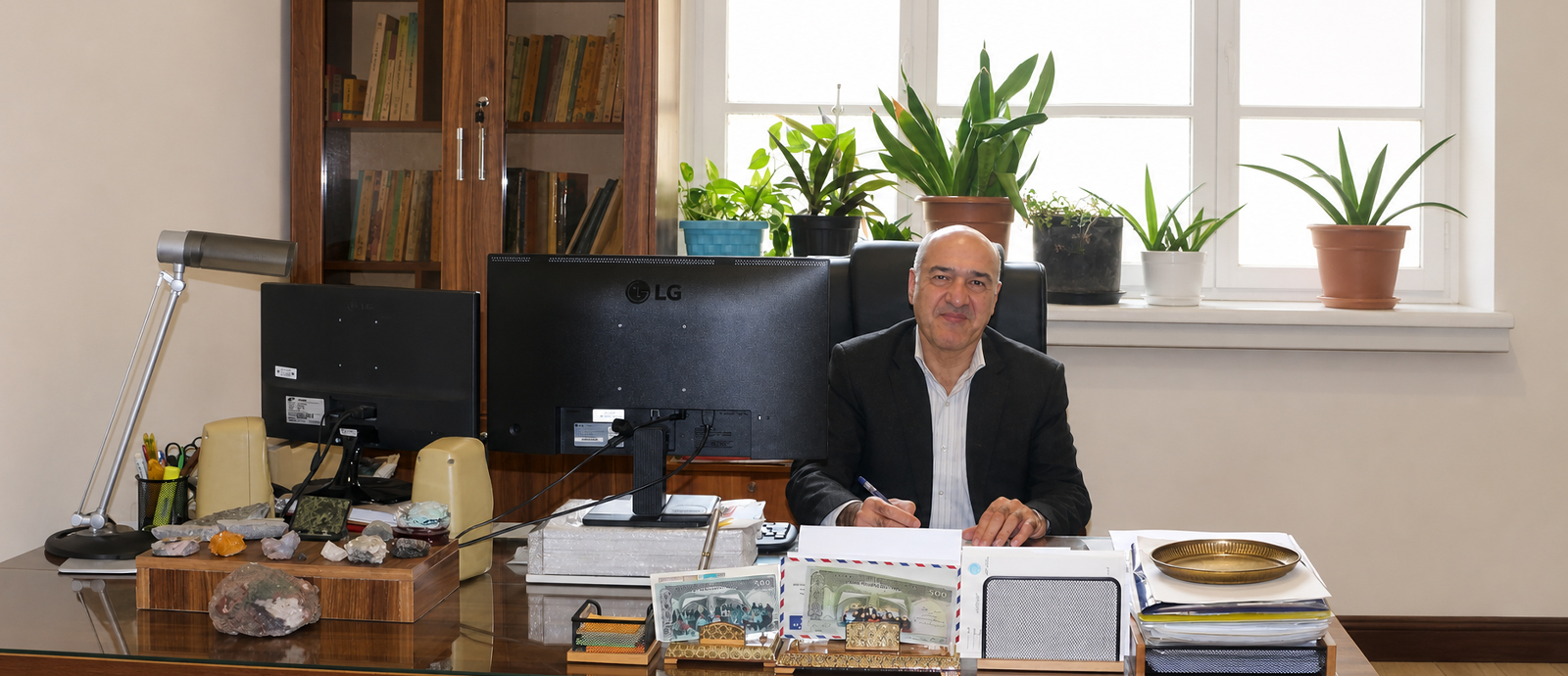
Dr. Ali Kananian, Editor-in-Chief of Geopersia, in an interview regarding the journal's operational trajectory, achievements, and future outlook, underscored the critical importance of enhancing scientific quality, expanding international collaborations, and publishing innovative, problem-oriented research in the Earth Sciences.
Geopersia is an open-access journal in the field of Earth Sciences, published biannually since 2010 under the auspices of the College of Science and the Publications Office of the University of Tehran. It holds a scientific-research accreditation from the Ministry of Science, Research and Technology of the Islamic Republic of Iran, possesses an international academic ranking, and currently maintains an impact factor of 0.354.
According to Dr. Kananian, the journal was officially indexed in Scopus in 2020, and subsequently in the JCR, Web of Science, and SCImago databases in 2022. Furthermore, the journal's CiteScore has exhibited a steady upward trajectory over the past five years, rising from 0.7 in 2020 to 1.7 in 2025, and it is presently positioned in the third quartile (Q3) of the Scopus journal rankings.
The Editor-in-Chief identified a multitude of factors as instrumental in enhancing the journal's scientific quality and research credibility, stating:
"The implementation of a rigorous and specialized peer-review process, drawing upon the expertise and scholarly experience of distinguished national and international researchers and referees; the regular and punctual publication of issues in strict compliance with international publishing standards, including the assignment of Digital Object Identifiers (DOI); the continuous improvement of electronic platforms facilitating seamless access to published content; and, most crucially, indexing in prominent international scientometric databases—all of these have collectively increased the global visibility of the journal's articles and have encouraged researchers to submit their work to this publication."
He emphasized that Geopersia has consistently endeavored in recent years to further elevate its standing among prestigious Earth Sciences journals by upholding the core principles of scientific integrity, impartial and constructive peer review, expeditious editorial decision-making, procedural transparency, strict adherence to research ethics, and the active cultivation of international academic partnerships.
Dr. Kananian, addressing the significance of Earth Sciences research, asserted that such research constitutes a cornerstone of scientifically informed decision-making for territorial management and natural resource governance, extending well beyond the mere expansion of fundamental knowledge. In his view, the findings of this research have direct and tangible applications in national development planning, the protection and sustainable management of natural resources, disaster risk reduction, the provision of essential raw materials for various industries, and the realization of sustainable development objectives.
In this regard, Geopersia, in alignment with numerous other reputable Earth Sciences journals worldwide, accords priority to scholarly contributions that not only demonstrate scientific novelty and rigor but also hold practical relevance for key industrial sectors, including petroleum, mining, water resources, and even policy formulation and strategic management.
The journal offers a distinguished platform for the dissemination of both fundamental and applied research through the publication of peer-reviewed articles spanning a broad spectrum of disciplines, such as petroleum geology, geochemistry, sedimentology, stratigraphy, petrology, tectonics, and seismology. Moreover, it places particular emphasis on manuscripts that address critical national challenges, including but not limited to the water crisis, land subsidence, seismic hazards, mineral exploration, and energy resource management.
Continuing the interview, Dr. Kananian elaborated on the journal's approach to attracting prominent domestic and international researchers, noting that the journal places considerable emphasis on criteria such as conducting thorough, unbiased, and transparent peer review through the careful selection of expert referees whose research backgrounds are closely aligned with the thematic content of each submitted manuscript; providing detailed, well-documented, and constructive feedback to authors; minimizing review and publication timelines; and ensuring the timely online release of accepted articles immediately upon final approval. Additionally, with the explicit aim of fostering and expanding international research collaborations, the journal particularly welcomes and encourages submissions that result from joint scholarly efforts involving authors affiliated with institutions in multiple countries.
In conclusion, the Editor-in-Chief of Geopersia addressed the journal's five-year strategic vision, stating that this vision is founded upon the overarching principle that the journal should transcend its conventional role as a mere repository for scholarly articles and instead evolve into a reputable and authoritative scientific reference for the dissemination of innovative, high-impact, and problem-oriented research in the Earth Sciences.
He further noted that the realization of this vision is contingent upon the achievement of the following objectives:
- Consolidating and further elevating the journal's standing among prestigious international Earth Sciences publications through the continuous improvement of citation-based performance metrics and a concerted effort to attain a second-quartile (Q2) ranking in the coming years.
- Increasing the representation of international authors, reviewers, and editorial board members, thereby enriching the journal's global academic perspective and outreach.
- Prioritizing the publication of research that addresses pressing regional and global challenges, including climate change, sustainable water resource management, geohazards, energy security, critical mineral resources, and sustainable development pathways.
- Maintaining and advancing the adoption of contemporary scientific publishing standards, encompassing the principles of open science, the sharing of research data, and the maintenance of full transparency throughout the peer-review and editorial processes.
- Enhancing the visibility, accessibility, and scholarly impact of published articles through broader and more comprehensive indexing, the timely dissemination of content, and the active development of international scientific networks and collaborations.
- Continuously extending formal invitations to prominent specialists and researchers, particularly from the international academic community, to serve as peer reviewers and to contribute their original research for publication in the journal.
PARS MEDEQ company and the Mossalanejad Cultural Foundation are the sponsors of Vice-Presidency for Research and Technology News Desk
Your Comment :