
Dr. Zeynab Fakhar: AI and the Future of Drug Discovery
The Vice-Presidency for Research and Technology News Desk of the University of Tehran:
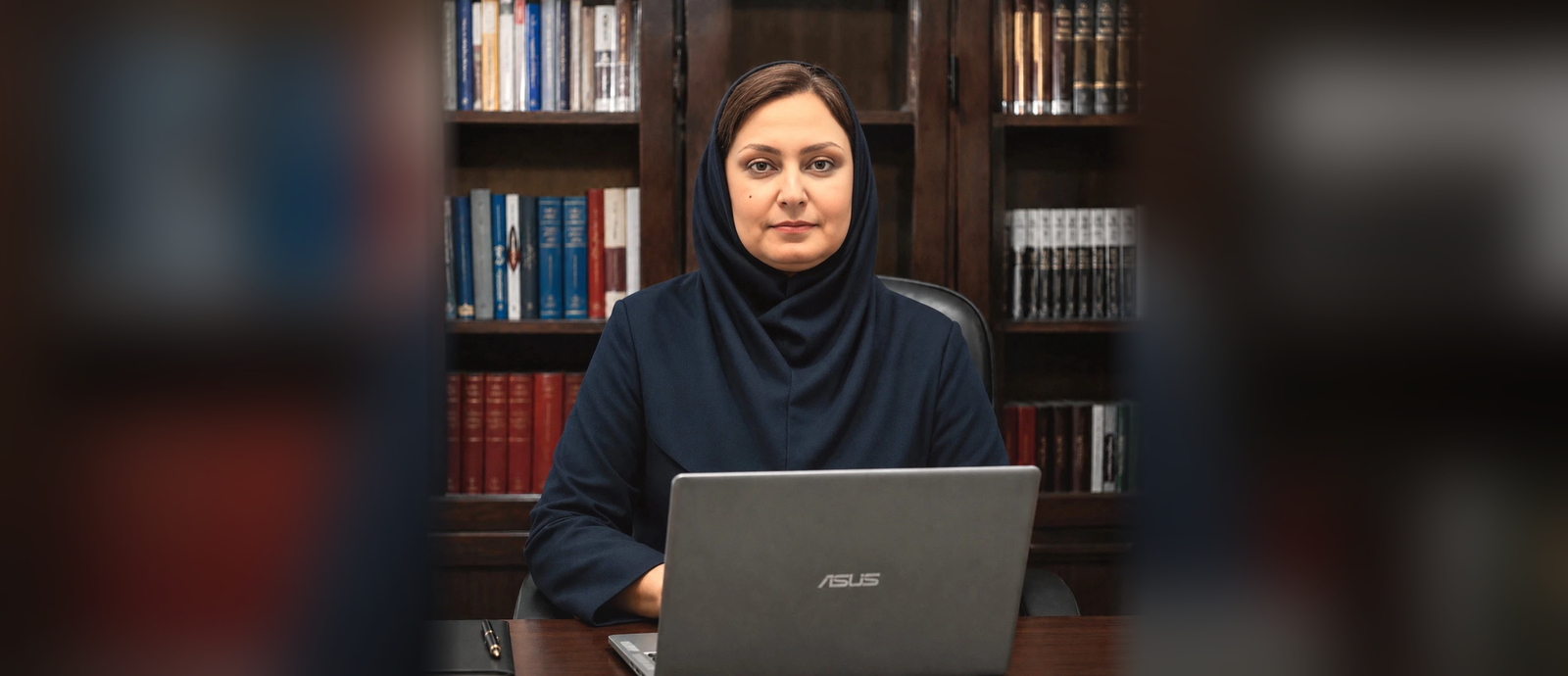
Novel data-driven technologies and deep learning are transforming the traditional boundaries of drug discovery. Dr. Zeynab Fakhar, a senior scientist in drug design and discovery with academic training from the University of KwaZulu-Natal (UKZN), South Africa, and a postdoctoral researcher under the CONNECT project at the Institute of Biochemistry and Biophysics (IBB), draws on years of experience in molecular modeling, anticancer and antiviral drug design, and collaborations with leading international research institutions. In this interview, she discusses the prospects for integrating artificial intelligence with medicinal chemistry and explores strategies for strengthening the position of Iranian universities in this rapidly evolving field.
How have artificial intelligence and machine learning transformed the process of drug discovery and design, and how can these technologies reduce the time and cost required to develop new medicines?
Artificial intelligence and machine learning have the potential to fundamentally transform drug discovery and design, as the development of a new drug is a lengthy, costly process with a high failure rate. The drug development pathway, from initial discovery to final approval, typically takes approximately 10 to 15 years or even longer. This process generally includes around 3 to 6 years for lead discovery and optimization, 2 to 3 years for preclinical studies, and 6 to 8 years for Phase I to Phase III clinical trials, followed by regulatory review.
Among a very large number of initial compounds, only a limited number advance to preclinical and clinical studies, and ultimately, perhaps only one compound successfully completes all stages. Therefore, one of the most important capabilities of artificial intelligence is its ability to reduce the molecular search space and increase the likelihood of selecting successful candidates at the earliest stages of drug discovery.
Machine learning, deep learning, and generative AI can analyze large-scale chemical, biological, and structural datasets and be applied to drug target identification and validation, virtual screening, activity and selectivity prediction, QSAR modeling, ADMET and toxicity prediction, and the design of novel molecules. Consequently, rather than synthesizing and experimentally evaluating an enormous number of compounds, molecules can first be computationally screened and prioritized, allowing laboratory and financial resources to be focused on the most promising candidates.
Some AI-driven drug discovery programs have reportedly reduced the time from project initiation to preclinical candidate selection to approximately 12 to 18 months. However, AI will not replace experimental studies, preclinical research, or clinical trials. In my view, the future of this field lies in the development of a closed-loop drug discovery ecosystem, in which computational design, prediction, synthesis, experimental testing, data generation, and optimization continuously reinforce one another in an iterative cycle.
You have worked in several areas, including antiviral drug discovery and research related to cancer and tuberculosis. What have been your most significant research experiences or achievements in these fields?
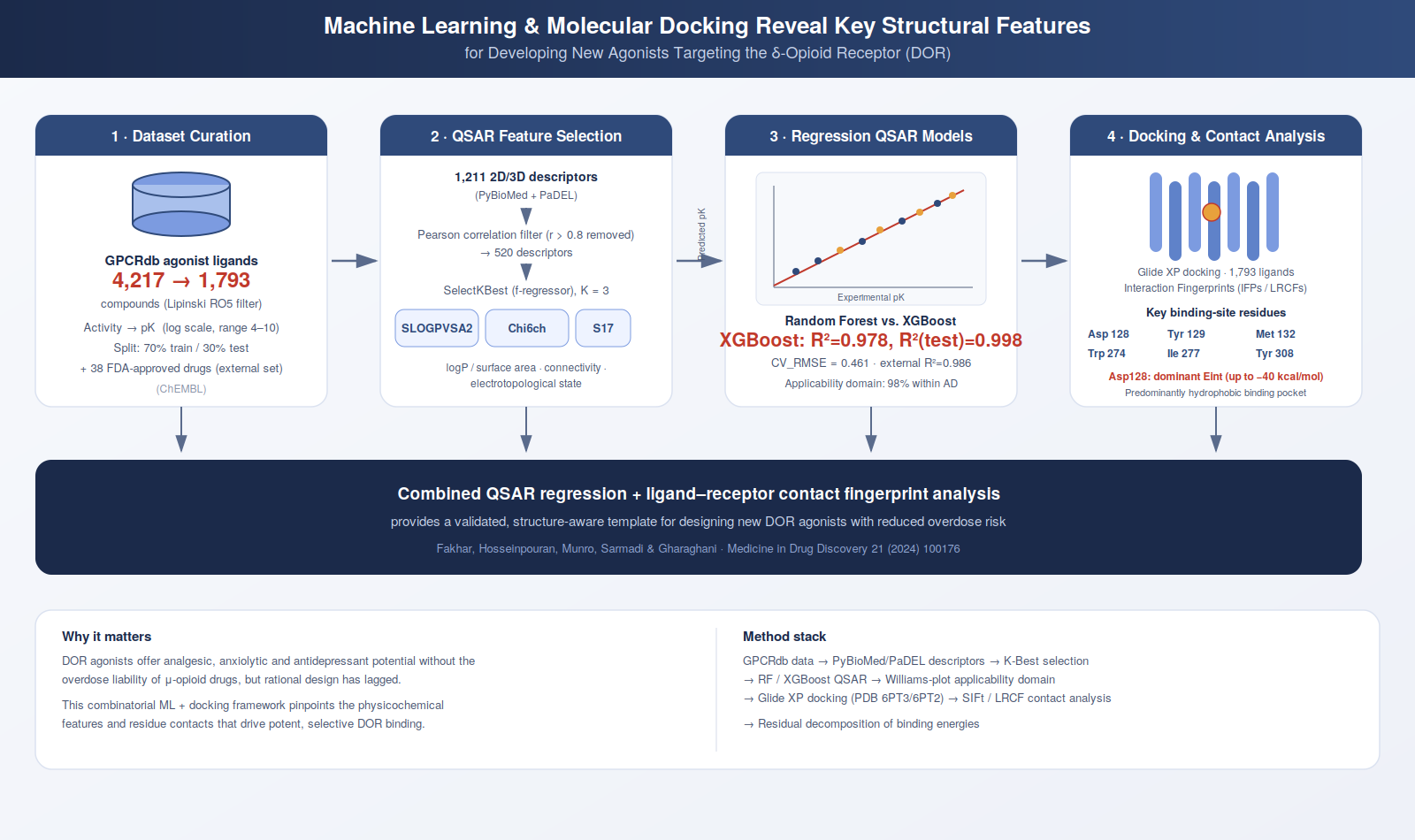
My primary expertise lies in computational drug discovery and design and computational medicinal chemistry. Throughout my research career, I have employed approaches such as structure- and ligand-based drug design, QM/MM molecular dynamics, pharmacophore modeling, virtual screening, quantum-mechanical calculations, and ADMET prediction. In recent years, I have expanded my research toward AI-driven drug discovery, cheminformatics, and machine learning-based QSAR modeling.
In the field of tuberculosis, I have focused on molecular targets associated with Mycobacterium tuberculosis and the identification of potential anti-tuberculosis compounds.
In the field of cancer research, during my postdoctoral fellowship at the University of the Witwatersrand, I investigated the mechanism of action of gold(III) compounds and their interactions with DNA-bound human topoisomerase II using molecular modeling approaches.
In the field of viral diseases, I have focused on the SARS-CoV-2 main protease (Mpro). In several studies, I investigated compounds such as ABBV-744 and anthocyanin derivatives as potential Mpro inhibitors using structure-based drug discovery approaches and molecular dynamics simulations.
To date, my research activities have resulted in 17 international publications, 457 citations, an h-index of 11, and an i10-index of 13, covering research areas including AI and Computational Drug Discovery, Antiviral Drug Discovery, Oncology Drug Discovery, and Tuberculosis Drug Discovery.
These research activities have involved collaborations with researchers and institutions including:
- University of KwaZulu-Natal, South Africa
- University of the Witwatersrand, South Africa
- University of Leeds, United Kingdom
- University of Campania, Italy
- University of Houston, United States
- University of California, San Diego, United States
- Johns Hopkins University, United States
as well as the University of Tehran, Shahid Beheshti University of Medical Sciences, and Sharif University of Technology in Iran.
Given the rapid development of artificial intelligence in healthcare and the pharmaceutical sciences, how do you evaluate the future of drug design and discovery? In your opinion, what capacities and priorities should Iranian universities and researchers focus on in order to participate effectively in this field?
In my opinion, the future of drug discovery is moving toward AI-native drug discovery. However, the success of this transformation depends on the effective integration of AI with medicinal chemistry, biology, pharmacology, and experimental research.
In our country, the priority should be the development of standardized, high-quality datasets; advanced computational infrastructure, including computing clusters and supercomputers; the development of interpretable and rigorously validated models; the expansion of open-source tools; and the training of interdisciplinary students and researchers.
By focusing on scientific and therapeutic challenges in areas where the country possesses meaningful research advantages, and by establishing strong national and international collaborations among groups specializing in artificial intelligence, medicinal chemistry, computational biology, and experimental research, Iranian universities can move beyond being merely consumers of AI technologies and become active producers of knowledge and innovation in AI-driven drug discovery.
PARS MEDEQ company and the Mossalanejad Cultural Foundation are the sponsors of Vice-Presidency for Research and Technology News Desk
Your Comment :