
The Strategic Importance of the Strait of Hormuz: From Deterrence to Management Challenges
Zahra Fayzii from the Vice-Presidency for Research and Technology News Desk of the University of Tehran:
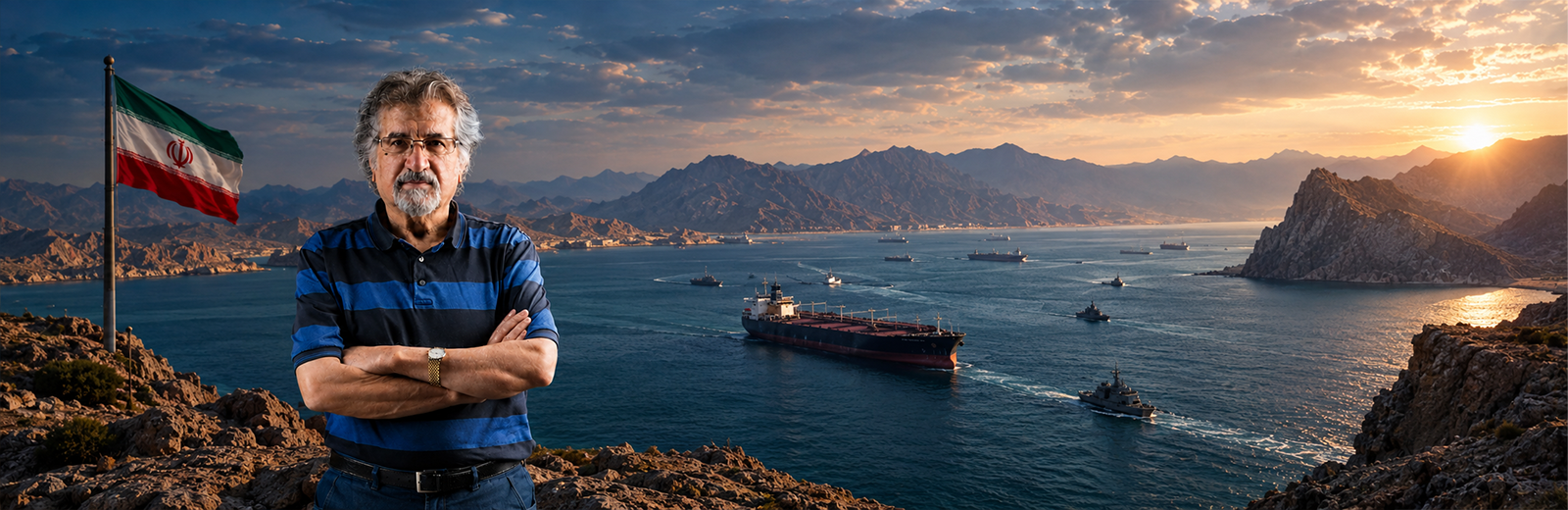
Dr. Nasser Hadian, a faculty member of the Department of International Relations at the Faculty of Law and Political Science, University of Tehran, examined the geopolitical dimensions of the Strait of Hormuz, highlighting its role in deterrence, its impact on the international economy, and the need to preserve its strategic significance.
Addressing the Strait’s role in deterrence, Hadian said that Iran demonstrated during the recent conflict that it possesses the capability and determination to close the Strait. He argued that rather than repeatedly demonstrating this capability, Iran should focus on consolidating and preserving it as a strategic asset. He added that, among the major powers, the United States is the only country capable of independently engaging in a large-scale war with Iran, and despite achieving some tactical successes during the recent conflict, it did not achieve its strategic objectives.
The University of Tehran professor also highlighted the impact of the Strait of Hormuz on the global economy, noting that recent developments demonstrated how disruptions to the waterway could have significant consequences for energy markets and the international economy.
Regarding revenue generation from the Strait, Hadian described some estimates suggesting revenues of tens or even hundreds of billions of dollars as exaggerated. He argued that transit-related revenues, even if substantial, could not justify measures carrying significant political and international costs. He warned that imposing mandatory fees or financial controls on the Strait could reduce public support and contribute to the formation of an international consensus against Iran.
Instead, he considered mechanisms such as voluntary payments associated with the transportation of different types of goods within international frameworks, as well as environmental charges, worthy of consideration. He emphasized that any revenue-generating mechanisms should have international support and legitimacy.
On the management of the Strait, Hadian said that extensive controls over maritime traffic during peacetime—including inspections or requiring vessels to respond to numerous questions—should be based on clear strategic benefits and an international legal framework. He stressed that there is a fundamental distinction between wartime and peacetime conditions, and measures that may be justified during wartime are not necessarily applicable in peacetime.
He also noted that the importance of the Strait of Hormuz extends beyond oil and petroleum products, as the waterway serves as a major route for the movement of commercial goods and provides access to important ports in the Persian Gulf. Maintaining its economic activity, he argued, should therefore be considered from a long-term perspective.
Hadian further identified Iran’s increased relative power in the region as one of the major consequences of recent developments and emphasized the need to use this capacity to pursue regional security arrangements. He said that proposals that had previously received limited attention are now being considered more seriously and that this opportunity should be used to advance diplomatic and regional security initiatives.
He also pointed to changes in the international balance of power, describing the decline in the relative power of the United States compared with other major powers, including Europe, Russia, and China, as another consequence of recent developments. He emphasized the need for these changes and their broader strategic implications to be carefully examined and documented.
PARS MEDEQ company and the Mossalanejad Cultural Foundation are the sponsors of Vice-Presidency for Research and Technology News Desk
Watch the interview clip with English subtitles below
Your Comment :